Why Start on Radio Kaikan's 4th Floor
Let me get straight to the point. The proper way to begin an Akihabara pilgrimage is at Kotobukiya on Radio Kaikan's 4th floor. Many beginners start from the basement and work their way up, but by the time they've exhausted themselves, they miss the new release displays they actually needed to see. Since the 2015 renewal, Radio Kaikan has had a different character on each floor. The 4th floor Kotobukiya is where you'll find painted samples and the pre-order reception counter. Original prototypes make their first appearance in these display cases three months before release.
You need to enter at 10:30 AM, right after opening. After lunch, tourists flood in and create a three-deep wall in front of the display cases. Painted samples look different in person than in photographs. The transparency of clear parts at the hair tips, the number of gradation steps in the skirt lining, the surface finish details on the base—these things cannot be judged from a monitor. These ten minutes determine whether you pre-order or hold out.
Below the 3rd floor are the second-hand corners. Items range from unopened Grade A boxes to box-less Grade C, but prices run about 20% higher than Japanese mail-order sites. Think of Radio Kaikan's second-hand section as having a "tourist tax" attached. Buying here has no advantage beyond the souvenir value of "I bought it in Akihabara." The real hunt begins after you leave Radio Kaikan.
The Second-Hand Shop Schedule: Morning and Afternoon Are Different
Cross from Radio Kaikan to the alleys on the opposite side of Chuo-dori and you'll find second-hand shops packed into 10-15 square meter spaces. Second-floor stores without even signboards. Climb the stairs and you'll find places where an entire wall is a glass display case. The key here is the stocking schedule. Most places receive new items on Tuesday and Friday mornings. Go on Wednesday afternoon and the good stuff is already sold.
One Friday morning at 11 AM in 2018, I scored an unopened Alter "Tohsaka Rin -15th Celebration Dress Ver.-" at 60% of retail at one second-hand shop. It had a sticker saying it had been stocked the previous night. In the adjacent display case was a Saber dress version from the same manufacturer, but with severe box damage. The difference between Grade A and Grade B was 5,000 yen, but looking at the creased sections of the box, it was clear the resale value would drop by half. I chose the Grade A.
After 2 PM, the incoming stock is organized. Instead, the staff have more free time, creating room for price negotiation. If you say "chotto takai desu ne" (that's a bit expensive) in Japanese, they'll sometimes knock off around 10%. However, this doesn't work for new items or popular Grade A pieces. It's limited to Grade B and below, minor works released over two years ago. If you can't communicate verbally, show them your desired price on a calculator app.
Another advantage of back-alley second-hand shops is prize figures. Figures that came out as arcade prizes start at 500 yen. There are many box-less Grade C items, but for prizes the box has little value anyway, so it doesn't matter. Prize figures from manufacturers like Sega and Banpresto with good paint quality come out at one-tenth the price of scale figures. There's nothing better for filling empty spots in your display case.
Nakano Broadway's 2nd Floor: Things You Only See When You Go Deep
Twenty minutes from Akihabara by JR, five minutes on foot from Nakano Station, and you're at Nakano Broadway. The first floor is an ordinary shopping center, but from the 2nd floor up it's different. The corridors twist like a maze, packed with tiny 10-square-meter private shops. The famous Mandarake main store is here too, but what I focus on are the nameless shops beside it.
Go deep into the back of the 2nd floor and you'll encounter shops that make you wonder "what exactly do they sell here?" Display cases have 1980s robot anime figures standing alongside 2020 Nendoroids. The owners are usually sixty or older. Strike up a conversation and they'll tell you stories about Wonder Festival thirty years ago. Many were dealers during the garage kit golden age.
The advantage of these shops is items without price tags. Top shelf of the display case, out-of-print scales in dust-covered boxes. Ask "kore wa ikura desu ka" (how much is this) and the owner thinks for a long while. "I stocked this ten years ago..." they say, and quote a price based on what they paid then. They don't know the current premium market rate. In 2019, I bought a 2009 Max Factory piece at its original retail price. It was trading at three times that on the second-hand market.
Another charm of Nakano Broadway is bonus items. First-press bonus parts, event-limited bases, store-exclusive mini figures—these things are sold separately from the main figure. The original figure is gone and only the bonus items are sold for 500-2,000 yen. For collectors who bought only the base figure without bonuses, these are treasures. I've collected three Good Smile store-exclusive acrylic stands here.
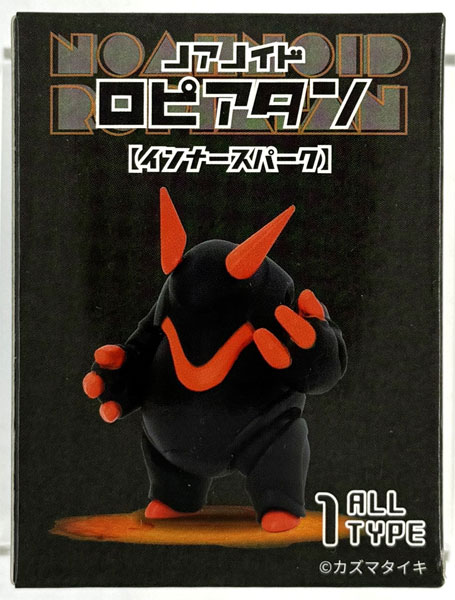 Noanoid Ropiatan Inner Spark (SO-TA POPUP Event in Kotobukiya Akihabara Shop Exclusive) →
Floor-by-Floor Strategy: Why You Shouldn't Start from the 3rd Floor
Nakano Broadway has four floors total. Mandarake is distributed across floors 2 through 4, and each floor handles different items. Beginners think "let's start from the top" and begin on the 4th floor, but this is inefficient. The 4th floor focuses on doujinshi and cosplay costumes. There aren't many figures.
The correct approach is to start on the 2nd floor and work up to the 3rd. The 2nd floor focuses on new releases and popular titles. The ratio of unopened Grade A boxes is high and prices are relatively expensive. This is where you gauge market rates. The 3rd floor mixes older works and minor titles. You often find things here you couldn't find on the 2nd floor. The same figure might be 20,000 yen on the 2nd floor and 15,000 yen on the 3rd. Both are Grade A.
Staircase location matters too. Broadway has staircases in multiple locations, but if you only take the central escalator you'll miss half the shops. The basic pattern is a "U-shaped route": go up the north-end staircase and come down the south-end staircase. Allow 30 minutes per floor and it takes an hour and a half to complete floors 2-3. Avoid lunch hour (12-1 PM). The corridors are narrow and when crowds gather you can't even stand in front of the display cases.
You must visit the private shops, not just Mandarake. Places with handwritten signs saying "フィギュア" (figure). In 10-15 square meter spaces, glass cases are stacked to the ceiling. Because the owner personally acquired the items, rare items appear that aren't in major Japanese hobby shops. In 2017, I discovered a Kotobukiya limited edition base set at a private shop. The main figure had sold and only the base remained, priced at 3,000 yen. Since I owned the regular edition of the same figure, I bought just the base and swapped it out.
When Should You Go to Den Den Town?
Osaka's Den Den Town looks like a miniaturized Akihabara, but the atmosphere is different. Second-hand and new release stores mix throughout the Nipponbashi 5-chome area, but it's quieter than Tokyo. Fewer tourists means you can monopolize the display cases. However, inventory is about half that of Akihabara.
Den Den Town's strength is pricing. The same Grade A second-hand items are 10-15% cheaper than Akihabara. With less competition, there's no rush to sell. If you're looking for second-hand scales released a year ago, this is advantageous. However, new pre-orders are the same price as Tokyo. Manufacturer suggested retail prices are fixed.
Go into the back alleys of Nipponbashi 5-chome and you'll find two-story second-hand shops. First floor is prizes and Nendoroids, second floor is scale figures. The stairs are steep and narrow, making it hard to climb with a large bag. It's better to leave your luggage at the first-floor counter before entering the shop. The second-floor display cases are divided by manufacturer. Major manufacturers like Alter, Good Smile, and Max Factory have separate corners, everything else is grouped under "その他" (others).
If you're going to Den Den Town, I recommend weekdays. On weekends, local Osaka collectors flood in. Friday morning is best. It's when items stocked Wednesday night get displayed. I visited at 11 AM on a Friday in March 2020 and scored an unopened 2018 Kotobukiya piece at half price. The clerk told me "it came in yesterday."
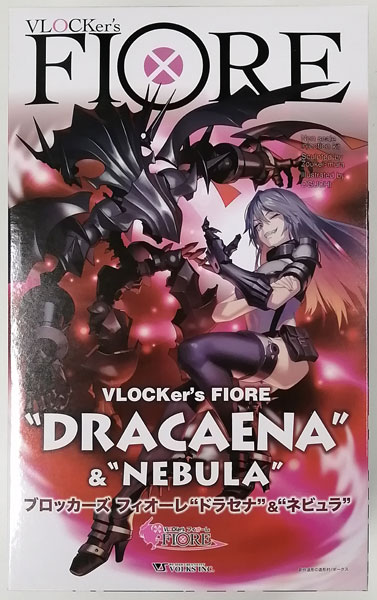 VLOCKer's FIORE Dracaena & Nebula w/Face & Clear Runner Special Edition Plastic Model (Volks Showroom, Akihabara Hobby Tengoku, etc. Exclusive) →
Forwarding Services, Customs, and the Art of Packing
Even if you buy in Japan, getting it back to Korea is the issue. If you want to bring it as carry-on luggage, box size is crucial. A 1/7 scale has a box about 30cm wide by 40cm tall. Two is the limit for a suitcase. If you bought three or more, you need a forwarding service.
There are forwarding service partner logistics centers in Ueno and Shinjuku, Tokyo. Send it by delivery from your hotel and they'll package and ship it to Korea. Shipping costs are calculated by weight, around 3,000 won per kilogram. One 1/7 scale weighs about 1.5kg including the box, so three figures means 15,000 won in shipping alone. Customs duties are added on top. The duty-free limit is $800. Go over and you pay 8% on the excess.
There's also the method of discarding the box and bringing only the figure. The figure body can withstand impact if wrapped in two or three layers of bubble wrap. Box volume is cut in half, fitting 4-5 figures in a suitcase. However, if you're thinking of reselling later, the box is essential. Presence or absence of a box creates a 30% difference in second-hand market rates. I bring only my oshi (favorites) with boxes and discard the rest.
Customs declaration is easier when you're honest. If you bought over $800, write it exactly as such on the declaration form. If you get caught in a random inspection with your bag open and undeclared items appear, the penalty is double the duty. You might get through once or twice on luck, but if you travel frequently, you'll get caught eventually. At Incheon Airport in 2019, I watched the person in front of me get caught for non-declaration and held at the customs booth for 30 minutes.
Pilgrimage Failure Stories: What Beginners Miss
The most common mistake on a first Akihabara visit is "only going to famous places." People visit landmarks like Radio Kaikan and the Kotobukiya main store and feel satisfied. Real finds come from nameless back-alley shops. Second-hand shops on the 2nd floor without signboards, tiny 10-square-meter private shops at the end of staircases—these are repositories of older works without premiums.
The second mistake is time allocation. Arrive at 11 AM and spend three hours at Radio Kaikan, and you'll be too exhausted in the afternoon to make it to Nakano. Limit Radio Kaikan to an hour and a half, have lunch, then move on to Nakano. Arrive at Nakano Broadway around 3 PM. They're open until 7 PM, so you have time.
Third is insufficient cash. Many second-hand shops don't take cards. Private shops especially are cash-only. In 2016 at Nakano, I found a figure I'd been wanting but didn't have enough cash to buy it. I tried to withdraw from a nearby convenience store ATM but my overseas card didn't work. The next day, that figure was already sold. Now I bring at least 100,000 yen in cash.
Fourth is ignoring packing materials. If you bought figures, you need to separately purchase bubble wrap and box tape. Second-hand shops only provide minimal wrapping. A single layer of newspaper is all. If you don't pack properly when putting things in your suitcase at the hotel, parts will break. After breaking a Nendoroid replacement hand part on my first visit, I now buy three rolls of bubble wrap at 100-yen shops.
 トレーディングフィギュア JAM akihabara(白) メイドカフェコレクション 東西編 →
Time-Based Strategy: Morning, Afternoon, and Evening Require Different Movements
Morning (10 AM-12 PM) is for checking new releases and confirming stock. Look at painted samples at Kotobukiya on Radio Kaikan's 4th floor, decide on pre-orders, tour 2-3 back-alley second-hand shops and check Friday stock. During this time slot there are few tourists, making it good for photographing display cases. Staff are also free, making it easy to ask questions.
Lunch (12-1 PM) is travel time. Twenty minutes from Akihabara to Nakano by JR. If you enter second-hand shops during this time, corridors are blocked and you can't see properly. Better to eat lunch near Nakano Station and then enter Broadway. There are restaurants on Nakano Broadway's 1st floor too, but no seats.
Afternoon (2-5 PM) is concentrated Nakano exploration. Start with 2nd floor private shops, then 3rd floor Mandarake, completing the "U-shaped route" up to the 4th floor. This time slot has more people, but it's still quieter than Akihabara. You can stand in front of display cases for ten minutes without getting looks. Shop owners are often doing display work, so new items go up in real-time.
Evening (5-7 PM) is for wrapping up and negotiation. Review what you saw all day and decide whether to buy or hold out. During this time slot, staff are busy preparing to close. Price negotiation doesn't work. Instead, commit to purchasing with the resolve that "if I don't buy today, there's no tomorrow." Japanese second-hand shops have fast turnover. A Grade A figure you saw today will be sold by tomorrow morning.
Why Does the Same Figure Have Different Prices at Different Shops
The second-hand market operates on supply and demand. Akihabara has many tourists, so prices are high. Nakano has a higher ratio of local collectors, so prices are closer to market rate. Den Den Town has limited inventory, so rare items are expensive and common ones are cheap. Even within the same city, each shop has different purchasing policies.
Large chains manage market rates through databases. Scan a barcode and the nationwide average second-hand price appears. Prices are set within a ±10% range from there. Private shops set prices by the owner's intuition. They often don't know what they paid ten years ago or what it sells for now. That's why you might find expensive items cheap at private shops, or conversely pay a lot for common items.
Box condition is also a variable. Grade A means not even a single corner of the box can be dented. Grade B means 1-2 noticeable damages. Grade C means no box. The same figure appears simultaneously as Grade A for 20,000 yen, Grade B for 15,000 yen, Grade C for 10,000 yen. Even if all three bodies are perfect condition, the box alone divides the price. If you're not reselling, Grade C is fine. I buy Grade A for my oshi, Grade B for the rest.
Season also has an influence. In December year-end and the March fiscal settlement period, second-hand listings increase. Collectors are organizing their display cases. When supply increases, prices drop. Conversely, during the July-August summer peak season, tourists flood in and prices rise. The same figure is 12,000 yen in March, 15,000 yen in August.
FAQ
If I can only go to Akihabara or Nakano, which should I choose?
Akihabara for new releases, Nakano for older works and rare item hunting. Akihabara's strength is painted sample displays and pre-order reception, and you can see pre-release prototypes in person on Radio Kaikan's 4th floor. Nakano Broadway has 2nd floor private shops where out-of-print scales from ten years ago sometimes appear at retail-level prices, making it advantageous for collectors completing old lineups of specific series. For a first visit, I recommend Akihabara.
Is haggling at second-hand shops really possible?
It's possible for Grade B and below, unpopular works released over two years ago. Say "chotto takai desu ne" in Japanese or show your desired price on a calculator and they'll sometimes adjust around 10%. However, popular Grade A pieces and unopened new releases hold firm at list price. Success rates are higher at tiny 10-square-meter private shops than large chains, and you're more advantageous after 2 PM when customer traffic is slow.
Should I bring figures bought locally with the box or just the body?
Box essential if you plan to resell, body only is fine if you'll keep it forever. Presence or absence of box creates a 30% difference in second-hand market rates, and to receive a Grade A rating the box corners must be damage-free. Wrapping just the body in three layers of bubble wrap fits 4-5 in a suitcase, but with boxes two is the limit. I bring only my oshi with boxes and discard the rest, sending them separately via forwarding service.
How should I structure my first day's pilgrimage itinerary?
I recommend this sequence: 10 AM Radio Kaikan 4th floor Kotobukiya new release check → 11 AM 2-3 back-alley second-hand shops → 12 PM travel and lunch → 2 PM Nakano Broadway exploration from 2nd to 3rd floor → 5 PM final purchase decisions. If you spend over three hours at Radio Kaikan, afternoon stamina bottoms out, so limiting it to an hour and a half and allocating more time to Nakano is more efficient. Friday morning visits let you target incoming stock.
---
May good fortune grace your display cases today as well.