The Identity of That Smell Every Time You Open the Cabinet Door
Let me get straight to the point. That distinctive odor that wafts out when you open a glass cabinet that's been closed for a while is PVC plasticizer. Most scale figures are made from PVC (polyvinyl chloride), and this material subtly volatilizes even at room temperature, producing an odor. The more enclosed the space, the more concentrated it becomes. It's harmless, but not exactly pleasant. There were community testimonies that certain scales released by Good Smile Company in the early 2010s had particularly strong odors immediately after opening, and I myself remember leaving a 1/8 scale I purchased at the time on the veranda for two days after unboxing. The smell subsides with ventilation, but the plasticizer itself continues to emerge. The problem is when that plasticizer meets dust. Just as dust particles stick to oily surfaces, figure surfaces with plasticizer seeping out attract airborne fine dust like a magnet. This is why when you put off cleaning the glass cabinet and finally open the lid, you find gray dust already settled on the hair and shoulders.
We close glass cabinets to keep out dust, but paradoxically, that very enclosure raises plasticizer concentration and induces static electricity, making dust stick even better. Enclosure without ventilation is the enemy, and open display becomes a dust magnet—this tightrope walk is the starting point of figure storage.
Direct Sunlight Is the Enemy of Figures—Principles of Display Positioning in the Fight Against Discoloration
If you've experienced a Nendoroid's white face subtly yellowing after just three months on a windowsill shelf, you've felt the destructive power of UV firsthand. Ultraviolet light attacks both PVC and ABS materials. The lighter the tone—white, light purple, light pink—the more pronounced the discoloration, and clear parts lose their transparency. Community photos of secondhand shop inventory showed that some prize figures released in the late 2000s displayed visible yellowing after just one year of sun exposure, and since then "no windowsill display" has become the first commandment of figure storage.
It's not just direct sunlight. Fluorescent lamps are also problematic. Fluorescent lights emit small amounts of ultraviolet radiation, and if you keep a glass cabinet lit for more than eight hours daily, the difference shows after a few years. Simply switching to LED lighting can reduce UV exposure by over 90%. Many figure-specific LED bars on the market these days emit warm white light with a color temperature around 3000-4000K while producing almost no UV. Lighting choice is not a matter of preference but of preservation.
Display positioning must satisfy three conditions. First, at least two meters from any window. Second, a wall where direct sunlight never touches even for an hour during the day. Third, somewhere not directly hit by air conditioner or heater airflow—extreme temperature changes can warp PVC or loosen part joints. If you cannot maintain these three conditions, you have no choice but to apply UV-blocking film to the glass cabinet or completely block sunlight with curtains. It's troublesome, but better than repurchasing the same figure as a reissue five years later.
Dust Cleaning Is a Game of Brushes and Timing
Between someone who opens their glass cabinet once a month and someone who opens it weekly, who keeps their figures cleaner? The answer is "the person who opens it weekly but doesn't touch them." Dust is less frightening for its accumulation speed than for the scratches created during removal. Wiping with a dry cloth lets fine dust particles scratch the paint surface, and cleaning with wet wipes removes the gloss with alcohol content. Cases of accidentally wiping off eyelash printing while cleaning around the eyes with cotton swabs appear regularly in communities.
The answer is soft brushes. Watercolor brushes size 0.5-1 sold at art supply stores or makeup brushes work well. Products with anti-static treatment are even better. Open the cabinet door and, without removing the figures, gently brush them off. For places like the gaps in split hair, the insides of clothing folds, and base corners, insert the brush bristles at a 45-degree angle and sweep. Never blow with your mouth. Saliva particles spray out and later become stains.
The worst timing for cleaning is right after ventilation. That's when dust is still flying around from air circulation. The proper method is to open the glass cabinet 30 minutes after running the vacuum, once dust has settled. And once you open it, close it within 10 minutes. Leave the cabinet door open while doing other things, and dust flies in and accumulates again in the meantime.
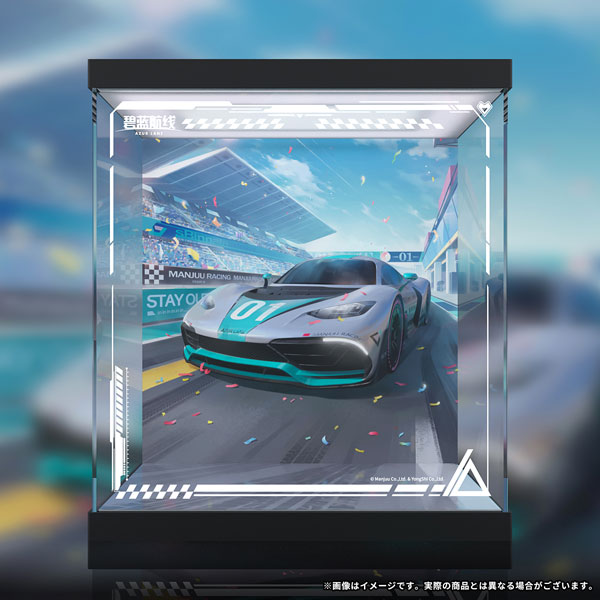 Azur Lane Shinano Moonlit Chrome Ver. Special LED Acrylic Display Case →
The Duality of Box Storage—The Tug-of-War Between Resale Value and Space
Collectors who can't throw away figure boxes fall into two categories. One type prepares for eventual resale, the other for safe packing during moves. Both are rational reasons, but after ten years of collecting, boxes end up occupying an entire room. I sorted out about half my boxes around 2015. The criteria were simple. I discarded boxes for popular characters with high reissue probability and general-release scales, keeping only boxes for products without reproduction like limited editions, event exclusives, and Wonder Festival day-of-event sales.
The impact of box presence on secondhand market prices varies by product. Nendoroids and Figmas sell for 80-90% of their price even without boxes if the main body is in good condition. For scales, box presence often creates a 30% or greater price gap. Especially for bulky products like 1/4 scales, shipping without a box increases damage risk, making transactions themselves difficult. For Wonder Festival day-of-event garage kits, lack of a box can make authenticity verification ambiguous.
If you're storing boxes, compression is forbidden. Fold a cardboard box flat and when you unfold it later, corners tear and the printed surface peels. The inner blister (clear plastic holder) doesn't need separate storage. If you need to repack, you can substitute bubble wrap, and blisters only take up space. Always keep instruction manuals and bonus cards. For some limited editions, bonus presence doubles the market price.
How Far Should Humidity Control Go—The Boundary Between Desiccants and Mold
"Should I put desiccants with figures?" is the most common question from novice collectors. The answer is "it depends on region and season." If you're in a southern region where summer rainy season humidity exceeds 80%, you need desiccants, but in an apartment where winter heating drops humidity below 30%, they can actually be harmful. PVC itself is moisture-resistant, but fabric materials and paper accessories develop mold. There were community reports that cloth-material capes on some scales released in the mid-2010s grew moldy.
Silica gel is the basic desiccant. Calcium chloride desiccants risk water pooling and touching figures. One 10-20g silica gel packet per glass cabinet compartment (60cm width standard) is sufficient. Check the color once a month and replace or microwave-regenerate when it turns pink. Excessive dehumidification hardens PVC and increases crack risk. The ideal is to keep a hygrometer inside the glass cabinet and maintain a 40-60% range.
Mold is all about prevention. Once it appears, spores remain even after removal. If you see white spots on the inner wall of the glass cabinet, remove all figures, wipe with alcohol wipes, then ventilate for 24 hours. If mold appears on the figure body itself, gently scrub with a soft toothbrush dipped in neutral detergent, rinse with water, and dry completely. Fabric materials cannot be washed, so you have no choice but to dab with a cotton swab dipped in mold remover. This process can cause discoloration, so test on an invisible area first.
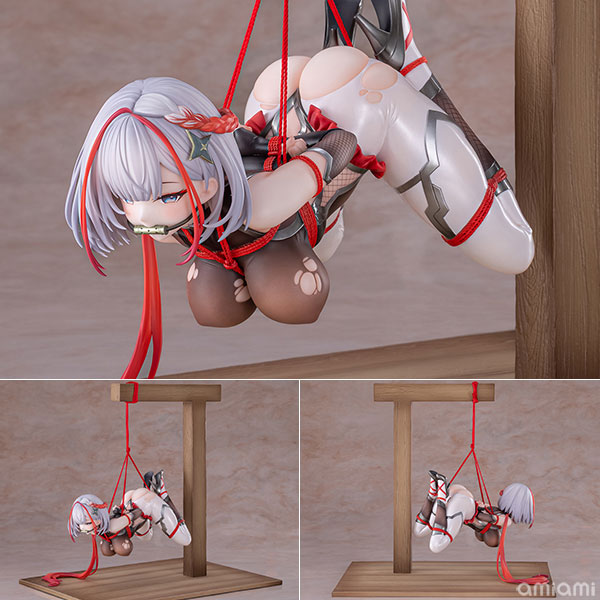 "Azur Lane" I-404 Dance of Crimson Strings Ver. 1/6 Complete Figure Special Edition w/Display Case →
Choosing Glass Cabinet LED Lighting—The Difference Between Color Temperature and Color Rendering
If you only look at price when choosing glass cabinet lighting, you'll regret it. Even at the same brightness, LED bars make figure colors appear completely different depending on color temperature and color rendering. Color temperature is expressed in K (Kelvin) units: 3000K is bulb color (yellowish light), 5000K is neutral white (white light), 6500K is daylight color (bluish light). Around 4000K natural light color is most suitable for figure display. Light that's too yellow makes white parts look yellowish, and light that's too blue kills warm color tones.
Color rendering (CRI, Color Rendering Index) should be 80 or higher. Illuminate with a cheap LED with CRI 60 and red looks orange, blue appears purple. Be suspicious if the product detail page lacks CRI specifications. 90 or higher is professional grade, and the price more than doubles. For hobby purposes, CRI 80-85 products are sufficient.
Lighting position should be at the front of the glass cabinet's top surface. Mount it on the back wall and shadows form on figure faces; illuminate from below and you get horror-movie backlighting. Mount it so light descends at a 45-degree angle, and facial features and clothing fold shadows come alive naturally. Dimming (brightness control) functionality is even better. At night you can lower to 50% brightness and use it like a mood light, reducing power consumption and extending LED lifespan.
Earthquakes, Cats, Small Children—Display Design to Fight Physical Threats
Glass cabinets fall over. Even in earthquake-free regions, they can topple when caught by a vacuum cord or bumped during a move. Open shelves not fixed to the floor are dangerous, and glass cabinets over 150cm tall not attached to walls have unstable centers of gravity even at 60cm width. Securing to the wall with furniture anchor straps is basic. If you're in rental housing and can't drive nails into walls, use products that wedge support bars between the ceiling and cabinet top.
If you have cats, cabinet doors absolutely must have magnets or locks. Sliding structures open with cat paws. Cats climb onto glass cabinets, and when jumping down kick glass shelves as footholds, making figures fall. Check the load capacity per shelf and place heavy scales on lower levels. 5mm glass thickness maxes out at 4-5 1/8 scales. 1/4 scales require tempered glass shelves 8mm or thicker.
In homes with small children, acrylic cabinets are better than glass. They don't shatter, have rounded corners, and transparency doesn't differ much from glass. Downsides are vulnerability to scratches and static electricity attracting more dust. Whichever you choose, installing locks at heights above 120cm from the floor where hands can't reach is safest.
 Character Vocal Series 01 Hatsune Miku Snow Miku Snow Princess Ver. 1/7 Complete Figure →
FAQ
Do figures really discolor when placed by windows?
Yes, they discolor. White PVC parts exposed to direct sunlight for three months show visible yellowing to the naked eye. UV decomposes plasticizer inside the material causing color change, so once discolored, it cannot be reversed. The only prevention is displaying at least two meters from windows or applying UV-blocking film to windows. Complete sunlight blockage with curtains is also effective.
How often should I clean the glass cabinet?
Once a month is appropriate. Dust off with a soft brush, and wipe glass surfaces with a microfiber cloth lightly dampened with water only. Avoid alcohol or glass cleaner as splashes on figures can damage paint—use them only after removing all figures. Rather than immediately after cleaning, putting figures back in 30 minutes later once dust has settled reduces re-adhesion.
Must I keep figure boxes?
Keep them if you plan to resell or move frequently. Especially for products without reproduction like 1/4 scales or Wonder Festival day-of-event sales, box presence creates 30% or greater secondhand price differences. Nendoroids and Figmas have no major transaction issues without boxes, but repacking without blisters requires ample bubble wrap to prevent damage. If space is limited, keeping only limited editions is also a method.
What LED lighting color temperature should I choose?
Natural light color around 4000K shows figure colors most naturally. 3000K bulb color is warm but makes white parts look yellowish, while 6500K daylight color is cool but kills red-spectrum tones. Choose products with color rendering (CRI) of 80 or higher. Low CRI distorts colors. Dimming functionality lets you lower brightness at night to save power and extend LED lifespan.
---
May good fortune find your glass cabinets today as well.