
Why I Pulled Out a Measuring Tape in Front of an IKEA Display Case
Let me get straight to the point. The key to figure display isn't pretty furniture—it's height. The average height of a 1/8 scale figure including base is 22–25cm. The standard shelf spacing in an IKEA Detolf display case is 33cm. With just 2cm more clearance, 1/7 scales fit as well, but the gap between the overhead LED strip and the tips of the hair parts is a mere 4–5cm. This number matters for a simple reason: if the lighting is blocked by the hair, the face gets buried in shadow.
In the summer of 2015, I stopped in front of a secondhand shop in Nakano Broadway. Every figure in the display case had light falling on its face. It wasn't ceiling lighting. Attached to the front edge of each shelf's top corner was a thin LED bar. Light descending at a 45-degree angle. That's when I realized why the figures in my display case at home looked so dark: I'd been relying solely on ceiling lights. The first weekend after returning home, I sat down in front of my display case with a measuring tape and LED strips.
The space of one display shelf is roughly 40cm wide, 40cm deep, and 33cm tall. It's three-dimensional. But what we see is a two-dimensional frame viewed from the front. How a figure receives light within that frame changes everything. This is also why master painted samples look so beautiful. Sculptors design them with lighting in mind.
Is Direct Sunlight the Enemy and LED the Ally?
A display case by the window is a romantic notion. Figures gleaming in natural light. But reality is different. After six months of direct sun exposure, a figure's hair color fades. ABS parts yellow. Characters in white clothing are especially vulnerable. In the early 2010s, "window display figure discoloration verification photos" became a hot topic in collecting communities. Photos taken with a new boxed copy of the same product side by side. The difference was undeniable.
I'm often asked whether UV-blocking film would solve this. It does help. But it's not perfect. Even films that block 99% of UV-A and UV-B can't prevent degradation from the visible light spectrum. Avoiding windows is the safer choice. Position your display case against an interior wall and create your own lighting. This is the common choice among fifteen-year veteran collectors.
LED strips became the standard for figure display in the mid-2010s. Products with USB power, remote control operation, and color temperature adjustment features are available for around 10,000 won. What matters is color temperature. Daylight white (6500K) is cold and harsh. Warm white (3000K) is cozy but has poor color reproduction. For figure display, neutral white (4000–5000K) is ideal. This is also the lighting range sculptors use when creating painted samples.
The Technique of Gaining 5cm of Shelf Height
Detolf shelves are adjustable. They're a peg-and-hole structure where you insert pins and rest the glass panel. The hole spacing is about 3–4cm. When placing 1/7 scales or figures with large bases, lower the shelf position by one notch. But then you'll have to put one fewer figure on that shelf. Space is finite. It's a choice.
There's also the option of using acrylic risers (tiered platforms). Placing figures on transparent acrylic stepped platforms makes characters in the back row visible too. A typical configuration has three tiers at 5cm, 10cm, and 15cm heights. You can fit 3–4 scales in one shelf. But using risers dilutes each figure's presence. Density or negative space—this too is a matter of preference.
I don't exceed two per shelf. Scale figures are sculpted in 360 degrees. They're complete products crafted down to the back view, skirt lining, and underside of the base. Pack them densely and you only see the front. When you open the display case door and pick one up to turn it around, that's when the figure becomes complete. Display isn't storage. It's dialogue.
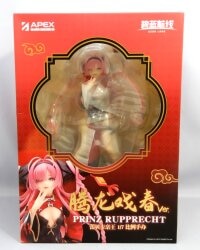 APEX Prinz Ruprecht Dragon's Ry?mon Climb? Ver. Special Edition PVC with Acrylic Display case included →
What Happens When You're Short One Room
In 2017, I moved. I gained one more room. I could bring in another display case. That year I pre-ordered twelve scales. The next year, eighteen. The display cases filled up, and boxes piled up. Release delays bought me time, but by the summer of 2019, boxes were going under the bed. I was out of display space.
There were three options: add more display cases, reduce pre-orders, or keep them stored in boxes. The apartment wasn't getting any bigger. Cutting pre-orders was painful. But keeping them piled up in boxes was even more unbearable. In the end, I made a rule: "One in, one out." Consignment sales at secondhand shops. At first I had regrets. Now I'm at peace with it.
In Japanese collector communities, there's talk of "minimal collecting"—keeping only a carefully curated few. It's not a trend but an inevitability. Space is a physical constraint, and constraints force choices. Choices clarify taste. I kept only works by specific sculptors and characters from specific series. I left two display shelves empty. Once I had negative space, the remaining figures looked sharper.
The War Against Dust: Even Sealed Display Cases Aren't Safe
Display cases aren't airtight. In a Detolf, there's a 1–2mm gap between the glass panels and frame. The door section doesn't close completely either. Dust gets in. Every three months you need to open the display case door, take out the figures, and dust them. Use a soft brush or air blower. Never use a wet cloth. Residual moisture leaves stains on the paint surface.
Dust caught in the crevices of hair parts is troublesome. There's a method of wiping with a cotton swab lightly dampened with anhydrous ethanol, but it's risky for products with weak paint. Air blowing is safest. A camera lens cleaning product is sufficient. Adjust the pressure to low so parts don't snap.
Humidity matters too. If humidity stays above 70%, box paper gets soggy, and PVC part surfaces can develop stickiness. Some collectors place desiccants in the lower shelf of display cases. Dry is better than overly humid. But excessive desiccant use has been reported to cause PVC hardening and warping. Maintaining indoor humidity at 40–60% is ideal.
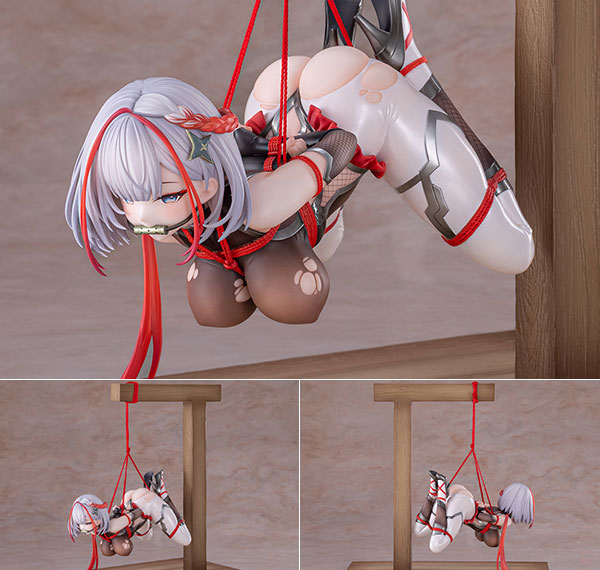 "Azur Lane" I-404 Dance of Crimson Strings Ver. 1/6 Complete Figure Special Edition w/Display Case →
Backgrounds and Props: The Boundary Between Diorama and Display
Some collectors place backgrounds behind figures. A4 printouts of iconic scenes from the series, or acrylic standees. The effect is clear: the character enters the scene. But if the background is too flashy, it buries the figure's own sculpting. I prefer solid-color backgrounds. Black velvet cloth or white acrylic panels. They make the figure's silhouette stand out.
There are also cases of arranging props together—Nendoroids or Figmas from the same series, or related goods. Placing small character merchandise next to a scale creates a story. But this is diorama work. It's different in nature from pure figure display. Don't ask which is correct. It's your display case.
Display methods I've seen at Wonder Festival dealer booths are also worth referencing. When exhibiting garage kit prototypes, dealers use one light per figure. Spotlight-style focused lighting from above. Black cloth background. Only the figure shines. It's hard to reproduce at home, but you can learn the direction: concentrate the lighting instead of dispersing it. Don't fear negative space.
The Box Storage Dilemma: Why We Can't Throw Them Away
Scale figure boxes are large. For 1/8 scale: roughly 25cm wide, 25cm deep, 30cm tall. Volume per box is about 0.019㎥. Ten boxes equal 0.19㎥—the size of a small wardrobe. Considering the possibility of rereleases and secondhand resale value, you can't throw them away. A secondhand figure without its box drops 30–40% in price. The box is a certificate of authenticity.
There's a method of folding boxes for storage. Carefully remove the clear tape, unfold flat. Volume reduces to one-fifth. But reassembly is tricky and fold marks remain. If you want perfect condition, don't fold. I use the space under my bed and above my closet exclusively for boxes. I cover them with plastic to prevent dust accumulation.
There are also collectors who don't store boxes at all. A resolution to "never resell" and "cherish forever." I respect that. But speaking from fifteen years of experience, tastes change. It's hard to love a character you adored in 2010 with the same intensity in 2025. Boxes are insurance that leaves your options open.
 Azur Lane Shinano Moonlit Chrome Ver. Special LED Acrylic Display Case →
FAQ
Is it okay to display on open shelves without a display case?
It's fine. But dust management frequency more than doubles. You'll need to dust with an air blower at least once a week, and direct sunlight and air conditioning drafts will hit them directly. The phenomenon of PVC parts' plasticizer evaporating and surfaces becoming sticky also happens faster than with display cases. Open shelves offer better accessibility but lower preservation. If they're figures you'll frequently handle and view from different angles, open display isn't bad.
What color temperature in Kelvin is best for LED lighting?
I recommend neutral white between 4000–5000K. Excessively cool daylight white (6500K) makes skin tones look pale, and excessively warm bulb white (3000K) distorts blue-toned clothing colors. The lighting environment sculptors use when creating painted samples is also generally around 5000K standard illumination. Choosing products with a Color Rendering Index (CRI) of 80 or higher yields more accurate color reproduction.
How many figures can you fit in one shelf?
Physically, up to 3–4 for 1/8 scale, but I recommend 1–2. Risers allow you to increase density, but each figure's presence gets diluted. Since scale figures are complete products with 360-degree sculpting, giving them room to view the sides and back is the proper way to appreciate the craftsmanship. Negative space makes figures stand out more than density does.
How often should you clean dust?
For display case storage, once every three months; for open shelves, once every two weeks. Use an air blower or soft brush, and avoid wet cloths or excessive alcohol use. For dust in hair part crevices, carefully blow it out with a low-pressure air blower, and don't touch areas with weak paint by hand. Regular cleaning is the surest way to prevent discoloration and degradation.
---
You can fit six scales into two display shelves. But all six won't receive proper lighting. The direction of light, each centimeter of shelf height, the spacing between figures—all of it changes their expression. When you're short one room, you need to sort out your life's priorities first, not your dolls. May good encounters reach your display case today as well.