Same Sculptor, Different Results
In the summer of 2019, scale figures from both Alter and Good Smile arrived in my display case the same week. Both figures were sculpted by the same original sculptor. Looking at their painted prototype photos side by side, the differences were nearly impossible to spot. But the moment I opened the boxes and held the mass-produced items in my hands, the two products had become completely different objects. The Alter piece had hair strand gradation that matched the prototype almost perfectly, while the Good Smile piece maintained the overall silhouette but had its fine gradations muddied.
Let me state my conclusion upfront: a figure's final quality depends as much on the manufacturer's production control capabilities as on the sculptor's skill. Even when you pre-order based on the same painted prototype, what you'll receive differs depending on which company's logo is printed on the box. Paint reproduction rate, seam line treatment, assembly precision, material selection—each manufacturer has its own priorities and compromise points. This article summarizes the characteristics of major manufacturers that have been discussed among domestic and international collectors from the late 2000s to the present, based on actual mass-produced items.
The days of clicking the pre-order button based solely on the sculptor's name are over. Now you need to understand each manufacturer's signature to make pre-orders without regret.
Why Alter Costs More: The Premium of Paint Reproduction
People seeing an Alter figure in person for the first time usually show similar reactions: "It looks exactly like the photos." The assessment that the gap between painted prototypes and mass production is at the industry's minimum level has remained unshaken for fifteen years. Particularly in reproducing paint gradation density, they're unmatched by other companies. The "Saenai Heroine no Sodatekata" 1/8 scale released in 2015 was evaluated as having blouse wrinkle shadow tones that differed by less than 0.5 shades from the prototype.
The secret lies in the difference in painting process stages. Alter is known to layer an average of 8-12 painting stages. Compared to the 3-4 stages of typical prize figures, that's nearly triple. To express a single gradation, they separately spray base tone, mid-tone, and highlight tone, then blend the boundaries with an airbrush. Naturally, process time and defect rates increase, and those costs are reflected in consumer prices. For 1/7 scale figures, the baseline is 25,000-35,000 yen.
But even Alter isn't perfect. Release delays are actually more frequent than other companies. As of 2022, it took an average of 18 months from pre-order to release, and the rate of on-time releases without delays fell below 40%. That's why the joke circulates in communities: "With Alter, trust the pre-order date, not the release date." Assembly precision is also more inconsistent than you'd think. Especially with large-scale figures, I frequently see cases where gaps appear at part joints or clearance develops between the base and main body. The impression is that they pour all their capabilities into painting while relatively neglecting structural design.
Good Smile Company: The Balance Point of Stability and Volume
Good Smile Company is probably the most familiar name to Korean figure fans. They dominated the articulated figure market with their Nendoroid and Figma series, and they maintain a steady presence in the scale figure line as well. Good Smile's strength is "stable upper-mid tier quality." Not as precise as Alter, but definitely above prize figures. And securing inventory is relatively easy.
Until the mid-2010s, Good Smile scales were evaluated as "adequate but bland." There were many criticisms that the painting was monotonous, poses were static, and hair sculpting was blunt. However, around 2017, they began raising quality through their in-house brand "ORANGE ROUGE." The "Re:Zero kara Hajimeru Isekai Seikatsu" Rem 1/7 scale (2018) was well-received for its clear part treatment on the blue hair tips and apron lace details. The price range is 18,000-28,000 yen for 1/7 scale, 20-30% cheaper than Alter.
Good Smile's real advantage is their reprint system. Popular works get reproduced 2-3 years later. This means even if you missed the first run, you have another chance to buy at retail price. No need to pay premiums for used items. On the other hand, there are concerns about quality differences between first and reprinted runs. In fact, some reprints have shown subtly different paint tones. A 2020 reprint of the "Hatsune Miku Magical Mirai 2017" version had a comparison review noting that the costume's cyan tone was 0.3 shades brighter than the first run.
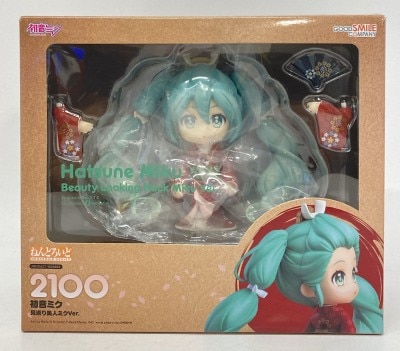 Good Smile Company Nendoroid Hatsune Miku Looking Back Beautiful Miku ver. 2100 →
Max Factory and FREEing: The Extremes of Size and Detail
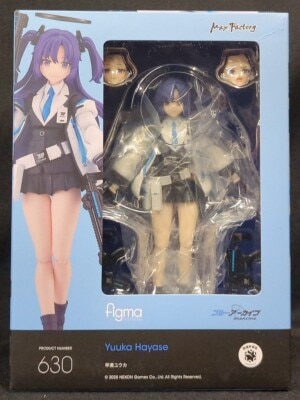
Max Factory is famous for its Figma series, but it also occupies a unique position in the scale line. Particularly well-known is the FREEing brand, a subsidiary known for its 1/4 scale bunny series. Max Factory's main scale line is characterized by dynamic poses and sharp sculpting. The "Fate/stay night" Saber armor series is still discussed today for its metallic paint finish and flowing cape expression.
FREEing's 1/4 scale bunny figures have become a genre unto themselves in figure culture. At over 40cm tall, they reproduce even fishnet stocking texture. The problem is price and storage space. A single 1/4 bunny exceeds 30,000-40,000 yen, and the box size approaches 30cm wide and 50cm tall. It takes up an entire display case shelf. Yet seeing new releases consistently come out and sell out shows there's definitely demand.
Max Factory scales' weakness is lack of consistency. Even within the same brand, quality variance between works is significant. Lines produced in collaboration with A-tier sculptors show finish comparable to Alter, but products without such collaboration remain mid-to-low tier. This is a manufacturer where you must check mass production reviews before pre-ordering.
What Choices Has Kotobukiya Made
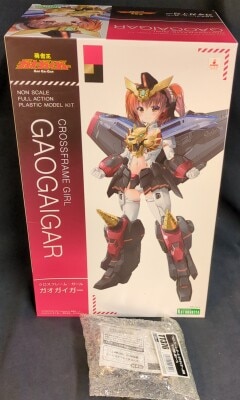
Kotobukiya is a company that handles both plastic models and scale figures. They secured a fanbase of mecha enthusiasts with their "Armored Core" series plastic models, and recently expanded their territory with the "Megami Device" series combining bishojo and mecha. Kotobukiya's identity in the scale figure line is "low-cost high-efficiency." At 15,000-22,000 yen for 1/7 scale, they're among the cheapest of major manufacturers.
What Kotobukiya chose to lower prices is simplification. Reduce paint layers, minimize part divisions, and keep poses static. The "Sword Art Online" Asuna 1/8 scale (2013) was praised for clean sculpting but fell behind Alter or Good Smile in hair gradation and costume wrinkle shadow expression. Instead, the value proposition is solid. Suitable for first-time scale buyers or collectors who want to gather more characters on the same budget.
Another strength of Kotobukiya is discovering niche titles. They make scales of characters from minor anime and games that major manufacturers won't touch. Early ship characters from "Kantai Collection" are representative examples. Limited quantities mean premiums develop easily, but often these are the only scales of those characters.
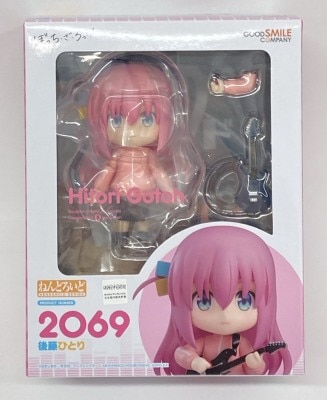 Good Smile Company - Nendoroid Goto Hitori/Resale Edition →
BellFine and Aquamarine: Dark Horses of the Budget Market
BellFine and Aquamarine are newcomer manufacturers that emerged in the mid-to-late 2010s and grew rapidly. Both companies entered the market with mid-to-low price scales in the 15,000-20,000 yen range. Initially they were treated as "cheap goods," but quality has improved noticeably in recent years. Aquamarine's "Eromanga Sensei" Izumi Sagiri 1/7 (2018) was well-received for its value given the price, with pajama wrinkle expression and bed accessory details.
What these manufacturers have in common is speed. From pre-order to release averages 10-14 months, 4-8 months faster than Alter or Good Smile. Release delays are also fewer. Instead, they compromise on paint reproduction rate. The painted prototype's delicate gradations often get simplified to 2-3 stages in mass production. Hair tip clear parts are also omitted or replaced with opaque parts.
The depreciation of these products in the secondary market is significant. I frequently see secondhand prices drop to 60-70% of retail within six months of release. Conversely, that also means excellent value when buying used. Opportunities often arise to purchase unopened grade-A secondhand items at half the retail price.
Are Prize Figures a Different Game
Prize manufacturers like SEGA, Banpresto, and TAITO have fundamentally different business models. Released as arcade prizes then distributed retail, the concept of retail price is hazy. In Japanese arcades, value is determined by crane game difficulty; in Korea, they're sold at retail prices set by import distributors. Usually in the 5,000-15,000 won range.
Until the early 2010s, prize figures were synonymous with "cheap goods." Single-coat paint, blunt sculpting, rough seam lines. But after 2015, prize quality improved dramatically. SEGA's PM Figure series and Banpresto's EXQ series earned evaluations of "excellent for around 10,000 won" with simple gradations and detailed sculpting. In fact, the "Demon Slayer" Tanjiro PM Figure (2020) reproduced even the haori checkered pattern and sword handle cord texture.
The path from prize figures to scales remains valid. I started with "Lucky☆Star" prize figures in 2008. Even after realizing the price of 10 prize figures equals one scale, for works I have strong character affection for, I still reach for prize figures first. They take up less display case space, and failures hurt less.
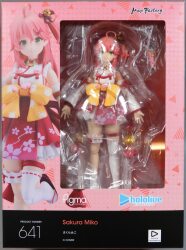 Max Factory figma Sakura Miko 641 →
Is a Sculptor's Name a Quality Guarantee
The culture of promoting a sculptor's name like a brand is unique to the Japanese figure industry. There are sculptors from famous illustrator backgrounds like Tony Taka and Enko, as well as full-time sculptors like Shinco and Akabeko. In communities, phrases like "if it's a ○○ sculpt, pre-order no questions asked" circulate.
But a sculptor's name alone cannot guarantee mass production quality. While sculptors personally paint prototypes, mass production comes from the manufacturer's factory. No matter how excellent the painted prototype, if paint gradations get muddied, seam lines become prominent, and assembly gaps appear during mass production, it's pointless. I've seen multiple cases where prototypes by the same sculptor were evaluated as masterpieces from Company A but mediocre works from Company B.
That's why patient waiting for mass production reviews matters. It takes 2-4 weeks after Japanese release for actual photos and evaluations to appear in domestic communities. There's risk that pre-order inventory will sell out during that period, but it's better than getting burned by the prototype-to-production gap after pre-ordering based solely on prototype photos. I established this principle in 2011 after seeing a certain Good Smile scale where hair gradation was simplified by 3 stages compared to the prototype.
FAQ
Why do prices differ so much between figure manufacturers?
Cost differences arise from paint process stages and part division complexity. Alter uses an average of 8-12 paint stages to achieve high prototype reproduction rates, but increased process time and defect rates result in 25,000-35,000 yen for 1/7 scale. Kotobukiya simplifies painting and uses static poses to sell at 15,000-22,000 yen. Even for the same 1/7 scale, prices can differ by a factor of two depending on manufacturer philosophy.
Do Good Smile reprints differ in quality from first runs?
Most are identical, but some reprints show subtle paint tone variations. A 2020 reprint of "Hatsune Miku Magical Mirai 2017" had a comparison review showing the costume cyan was 0.3 shades brighter than the first run. Even with the same molds, if the painting factory or timing differs, subtle differences can occur. Not a critical difference, but if you're sensitive to color, checking community comparison reviews is advisable.
Is it safe to pre-order based solely on the sculptor's name?
Sculptors create prototypes, but mass production comes from manufacturer factories. I've seen multiple cases where works by the same sculptor became masterpieces with 95% paint reproduction at Alter but mediocre works at 80% from other companies. While a sculptor's name is valid for predicting prototype quality, manufacturer track record is more important for guaranteeing mass production quality. I recommend the habit of checking mass production reviews before pre-ordering.
Do budget manufacturer products have collectible value?
Value for money is sufficiently high. BellFine and Aquamarine cost 15,000-20,000 yen, half of Alter's prices, but basic sculpting and painting far exceed prize figures. However, secondhand value depreciation is steep, dropping to 60-70% of retail within six months of release. Disadvantageous if considering resale, but no problem for personal enjoyment, and actually excellent value when buying secondhand.
---
Painted prototype photos are not promises but possibilities. What transforms those possibilities into reality is the manufacturer's production control capabilities. Even with the same character and same sculptor, what you'll receive differs depending on which company's logo is printed on the box. Fifteen years of accumulated data are clear—Alter excels in painting, Good Smile in stability, Max Factory in posing, Kotobukiya in value. First determine what your priorities are. Then choose your manufacturer.
May good connections reach your display cases today as well.