The Trust Built by a Logo in the Corner of a Box
The first thing I check when opening a delivery box is the small logo on the side of the figure package. If I see Good Smile's smiling mark, I relax. If Alter's logo appears, I raise my expectations two notches. Before even opening the box, I'm already predicting the quality trajectory of that figure.
When I first entered the scale figure world around 2010, distinguishing manufacturers was simply a matter of "expensive places" versus "cheap places." But as multiple makers began releasing the same characters, the differences became clear. At Wonder Festival Winter 2015, when I saw decoration masters of the same character at three different booths, I realized that manufacturer personality wasn't simply about price differences. One focused on gradation in the paint work, another pushed the dynamism of the pose, and the third chose stable balance. To cut to the conclusion: a figure manufacturer's personality is a kind of signature touch created by how they employ sculptors, manage painting processes, and cater to their target audience's tastes.
From here, I'll dissect the signature touch of the four manufacturers most discussed in Korean figure communities—Good Smile Company, Alter, Max Factory, and Kotobukiya. I'll pinpoint what strengths each maker possesses, what weaknesses they carry, what type of collector they suit, using actual product details.
Good Smile Company: Reliability as a Weapon
Good Smile doesn't fail. This is both praise and limitation.
After dominating the deformed figure market with Nendoroid Hatsune Miku #1 in 2007, Good Smile pushed a strategy of "minimizing failure probability" in their scale figure line as well. This is why they're counted among the makers with the smallest gap between decoration master and mass production. The sculpting may not be flashy but it's stable, the paint work clearly distinguishes each part, and the finish is clean. Particularly, facial sculpting transfers the atmosphere of the original illustration almost intact.
But that stability sometimes reads as "safe." When I received a certain anime protagonist's 1/7 scale released in 2018, there were no defects in sculpting or painting, but there was no moment that touched my heart. It was exactly the quality level I'd expected. Moments of amazement are rare before Good Smile figures. But so are moments of disappointment.
Good Smile's real strength is the breadth of their lineup. With two flagship brands—Nendoroid and Figma—they cover nearly every genre, and they consistently release scale figures in the mid-price range. From 2021, they even added the budget Pop Up Parade line to lower the barrier for newcomers. Ultimately, Good Smile suits collectors who want a "first figure" or a "safe preorder." When your wallet gets more comfortable, you can think about moving to other makers then.
Alter: Not Madness, but Dedication
Before an Alter figure, I sigh. In a good way.
Since the mid-2000s, Alter has defined the realm of "premium scale figures" on their own terms. Prices run 1.5 to 2 times other makers, but the moment you hold the mass-produced product in your hands, that difference makes sense. The flow of each individual strand of hair, the naturalness of costume wrinkles, the gradation of skin tone painting—every single part is completed with a density that makes you think "did they really need to go this far?"
A 1/7 scale product released in 2017 had separate paint work even on the skirt lining. A part absolutely invisible in normal posing. The underside of the base, the area usually hidden by the display cabinet floor, also had finishing applied. This kind of detail is Alter's identity. The dedication of "making even the parts you can't see."
Of course, there are weaknesses. They are the emperor of release delays. From preorder to release, a year and a half to two years is standard, and going over two and a half years isn't uncommon. The community shares the self-deprecating joke that "with Alter, you trust the release year, not the release date." But the mass-produced product that arrives at the end of the wait has nearly identical quality to the decoration master. That's why Alter collectors choose to endure.
Alter suits collectors who want "the one ultimate piece." When you have only one or two spots left in your display cabinet, you choose Alter to fill that space.
![Fate/Grand Order Rider/Altria Pendragon [Alter] 1/7 Complete Figure](https://img.amiami.com/images/product/main/193/FIGURE-050383.jpg) Fate/Grand Order Rider/Altria Pendragon [Alter] 1/7 Complete Figure →
Fate/Grand Order Rider/Altria Pendragon [Alter] 1/7 Complete Figure →Max Factory: Between Sculptural Beauty and Figma
Max Factory competes on sculptural prowess. Especially in dynamic poses, they overwhelm other makers.
While most 1/7 scale lines feature static standing or sitting poses, Max Factory prefers dynamism—jumping, spinning, attack motions. A certain action anime character released in 2019 was posed in a spinning kick stance with one leg raised in the air. The central axis: a single tiptoe. Posing made possible by precise base connection.
Figma is also Max Factory's flagship brand. In the articulated figure market, Figma is nearly the standard. Joint structure is precise, replacement parts are abundant, and above all, "natural articulation" is possible. Because even small joints like wrists and ankles move delicately, the range of posing is wide.
However, Max Factory's paint work is a step below Alter or Good Smile. Particularly in gradation and shadow application, there are disappointing aspects. A scale figure released in 2020 had excellent sculpting but monotonous skin painting that reduced three-dimensionality. Ultimately, Max Factory suits collectors who prioritize "sculpting and posing," as well as collectors who want to enjoy articulated figures through Figma.
Kotobukiya: The Standard and Limits of Value
Kotobukiya competes on quality-to-price ratio. And that strategy is generally successful.
In an era when 1/7 scale prices exceed 20,000 yen, Kotobukiya consistently releases products around 15,000 yen. Of course, detail falls short compared to Alter or Max Factory, but for newcomers or collectors wanting to expand their lineup, it's a reasonable choice. Particularly the "1/8 Scale Easy Eight" series maintained respectable sculpting while lowering prices through assembly-type structure.
Another Kotobukiya strength is speed of license acquisition. When new anime air, they quickly announce lineups and release faster than other makers. A certain popular 2022 anime had a Kotobukiya figure released six months after broadcast ended. The Alter version of the same character still has no release date.
But mass production quality variance is large. Sometimes decoration masters are excellent but painting collapses in mass production. A 2018 release had eyebrow positioning in the face paint different from the decoration master, sparking community controversy. When preordering Kotobukiya products, you must check mass production reviews. Kotobukiya suits those who want to collect "many characters quickly, at accessible prices."
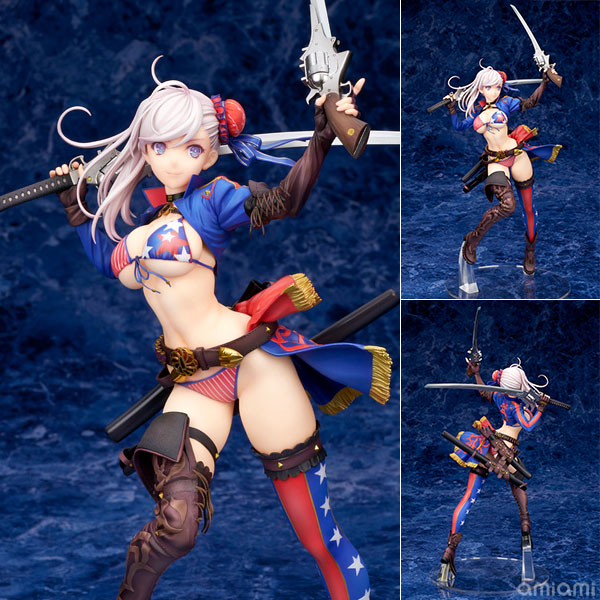 Fate/Grand Order Berserker/Musashi Miyamoto 1/7 Complete Figure →
Same Character, Different Choice: The Reality of Manufacturer Comparison
Hatsune Miku is a character almost every maker has released. So comparison is possible.
Good Smile's Miku faithfully reproduces the original illustration feel. Twin tail volume and costume detail are completed stably within expected ranges. Alter's Miku is a level above. They insert clear parts at the hair tips to bring out transparency, and add shadow painting to each costume wrinkle. The price is 10,000 yen more than Good Smile.
Max Factory's Miku generally chooses dynamic poses—the moment of singing or dancing postures. Higher sculpting difficulty than static poses, but correspondingly more vitality. Kotobukiya's Miku has the lowest price and lineup releases quickly. In exchange, detail is relatively simple.
Ultimately, even for the same character, maker selection differs based on "which version you want." Good Smile for stability, Alter for premium, Max Factory for dynamism, Kotobukiya for value. This formula applies to most characters.
Minor Manufacturers and Emerging Makers: Discovering the Niches
Beyond the major four, there are noteworthy makers. Names like FuRyu, FREEing, BellFine, Union Creative.
FuRyu started with budget prize lines but has rapidly raised scale quality in recent years. A 1/7 scale product released in 2021 showed sculpting similar to Kotobukiya at around 12,000 yen. FREEing is famous as a "bunny figure" specialist maker. Their 1/4 scale large bunny line has formed an enthusiast layer with overwhelming size and quality. Though prices also exceed 40,000 yen.
BellFine has strengths in sensual sculpting, and Union Creative consistently releases original lines with unique concepts. These makers dig into niches outside mainstream tastes. Because they select characters or poses the major four wouldn't release, from a collector's perspective, situations arise where "only this maker has this character."
Greater caution is needed when preordering minor maker products. Mass production quality variance is large and release delays are frequent. But satisfaction when you encounter a successful product equals major makers.
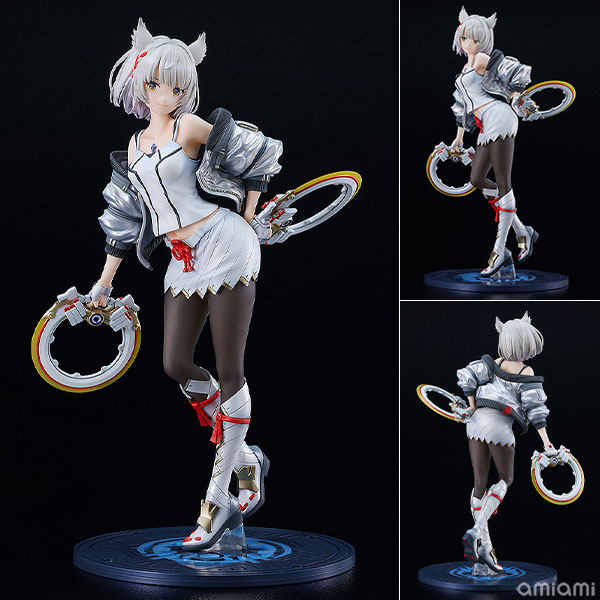
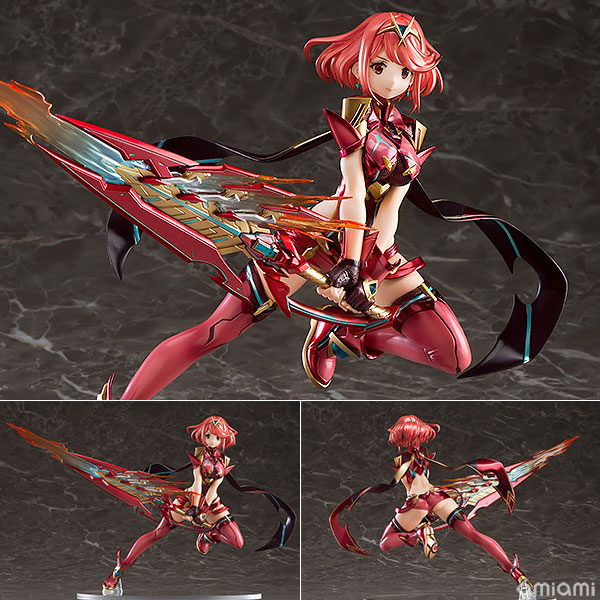 Xenoblade Chronicles 2 - Pyra 1/7 Complete Figure →
Maker Selection Criteria: Where Is Your Display Cabinet Heading?
What I've realized after fifteen years of collecting figures is that manufacturer loyalty is actually the process of understanding your own taste.
As a beginner, you preorder based only on character. If it's a character you like, the maker doesn't matter. But as display cabinets fill and wallets thin, selection criteria emerge. Whether you prioritize sculpting, painting, price-to-quality ratio, or release speed. According to those criteria, preferred makers are determined.
My display cabinet is now filled with 60 percent Alter, 20 percent Max Factory, and 20 percent others. Because I didn't want to sacrifice either sculpting or painting, and had the patience to endure release delays. But a friend's cabinet centers on Kotobukiya and Good Smile. Because they wanted to collect many characters quickly and affordably. Neither is wrong.
There's no correct answer to maker selection. But the process of learning what you prioritize is necessary. In that process, the small logo in the box corner gains meaning.
FAQ
Which maker do you recommend most for figure beginners?
I recommend Good Smile Company. They have the smallest gap between decoration master and mass production, mid-level pricing, and above all, low failure probability. The path of starting with budget lines like Nendoroid or Pop Up Parade and moving to scale is natural. Because disappointment with a first figure easily leads to abandoning the hobby itself, stability is most important.
Why are Alter figures expensive?
The time and personnel invested in sculpting and painting processes are different. Alter adds separate sculpting and painting even to invisible parts, and maintains tight quality control in the mass production stage. Details like clear parts at hair tips, costume lining gradation, and base underside finishing double process time. Consequently, production costs rise and consumer prices follow.
When multiple makers release the same character, which should I buy?
Compare decoration master photos, then definitely check mass production reviews. Each maker emphasizes different points. Whether facial sculpting appeals to you, whether the pose is dynamic, whether paint density is high, whether the price is reasonable—decide priorities and choose accordingly. If you have room, buying both is also an option. Because even the same character becomes a completely different figure when the maker differs.
Is Kotobukiya figure quality inferior?
For the price, it's respectable. But there's mass production variance, so preordering based only on decoration masters can lead to disappointment. Particularly in details like face painting and eye positioning, individual variation occurs. For Kotobukiya products, checking actual reviews after release first and approaching through reprints or remaining stock purchases is safer. If you don't rush, you can greatly reduce failure probability.
---
May good encounters reach your display cabinet today as well.