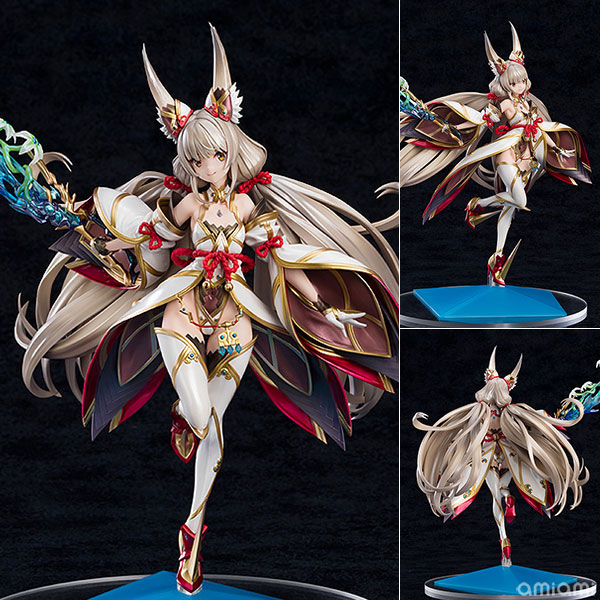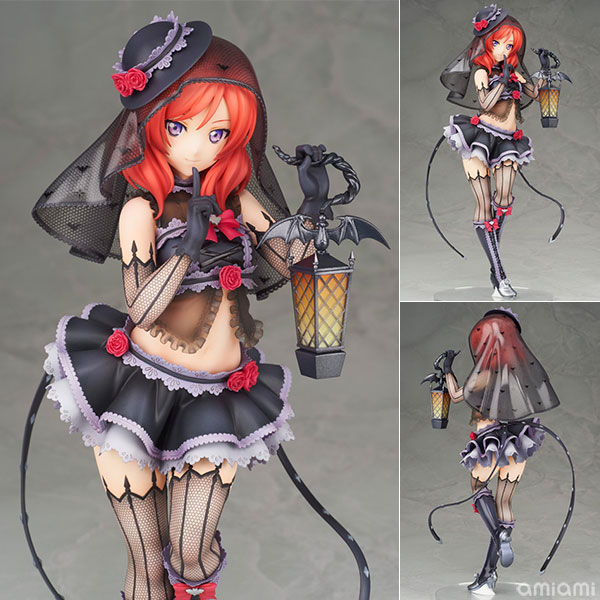
Standing Before a Glass Cabinet Holding Five Rems
After lining up five Rem scale figures from "Re:Zero," I had to wonder if they were even the same character. These were 1/7 scales from different manufacturers released between 2016 and 2019, and not a single detail matched—not the shape of the eyes, not a single skirt pleat. The Good Smile Company product had a round, bright face. The Alter version had slightly downturned eyes with shadows haunting the expression. They were supposedly based on the same original illustration, so where did these differences come from? Let me cut to the chase: you need to look at the sculptor's name first, not the manufacturer's logo. The individuality of sculpting comes from human fingertips, not corporate entities.
Flip over a figure box and you'll find small print that says "Prototype: ○○○." When this name matches, figures feel similar even across different manufacturers; when it differs, you get completely different dolls even from the same company. When I entered this hobby in the late 2000s, I didn't know this and would assume "I guess all Good Smile products are like this," only to be confused later when I saw wildly varying quality even among products bearing the same Good Smile logo. I started paying attention to sculptor names while browsing dealer booths at Wonder Festival. Seeing sculptors' names prominently displayed on nameplates in front of garage kits, with kits by the same person grouped together, it clicked: "Ah, you read sculpts by individual, not by brand."
Good Smile Company: Between Mass Appeal and Stability
Since its 2001 founding, Good Smile has dominated the articulated figure market with Nendoroid and figma, but in scale figures it's known as "the safe choice." Charitably speaking, they have few failures; speaking coldly, they also have few memorable masterpieces. Through the mid-2010s, Good Smile scales often heard complaints of "the painted sample looks pretty but the production version comes out bland." Paint on faces especially tended to come out lighter than the prototype, leading to the community maxim: "Good Smile faces require checking actual product reviews before preorder."
But around 2016, as their pool of freelance sculptors diversified, personality began to split even within Good Smile's product lineup. For instance, Tsukuru favors sharp, dynamic poses, while Aki prefers static, elegant sculpts. Even bearing the same Good Smile logo, you get completely different dolls depending on the sculptor's name. Just look at the "Hatsune Miku Magical Mirai" series—the 2016 and 2019 versions have entirely different poses and expressions when different sculptors are involved. When choosing Good Smile products, the proper approach is to look up the sculptor's name on the back of the box and research that person's past work, not the company name.
Nendoroids are the exception. Face part molds are standardized and expression design follows internal guidelines, so "Nendoroid feel" remains consistent regardless of who sculpts the prototype. That's why the Nendoroid brand itself serves as quality assurance, but scales do not work that way.
Alter: Artisan Touch and Premium Price Tags
Since its 1998 founding, Alter has built a reputation as "expensive but trustworthy." Indeed, through the mid-2010s, while other companies sold 1/8 scales in the 10,000 yen range, Alter charged 15,000 yen or more. That difference manifests in layers of paint. Hair tips get four-stage gradation instead of two, shading gets applied to skirt linings no one will see, and even base textures receive different finishing. Alter's strength also lies in having the industry's smallest gap between painted samples and production versions.
Their sculptor pool is selective. Alter rarely publicizes its in-house sculptors, but the community has identified several names. Yamashita Shunya is known for delicate costume wrinkles and natural poses, while Sawada Koichi is recognized for sharp eye lines and tense stances. These sculptors are famous for spending six months to nearly a year refining a single piece. That's why Alter products frequently experience release delays. A "Fate" Saber product scheduled for 2019 once came out in 2021. But after release, the consensus was "worth the wait."
Alter's weaknesses are price and scarcity. Initial production runs are small, so missing preorders means premiums spike quickly. The 2017 "Love Live!" Nishikino Maki 1/7 had a release price of 16,000 yen but secondary market prices exceeded 30,000 yen by 2020. Reprints are virtually nonexistent. Patient waiting doesn't work with Alter.
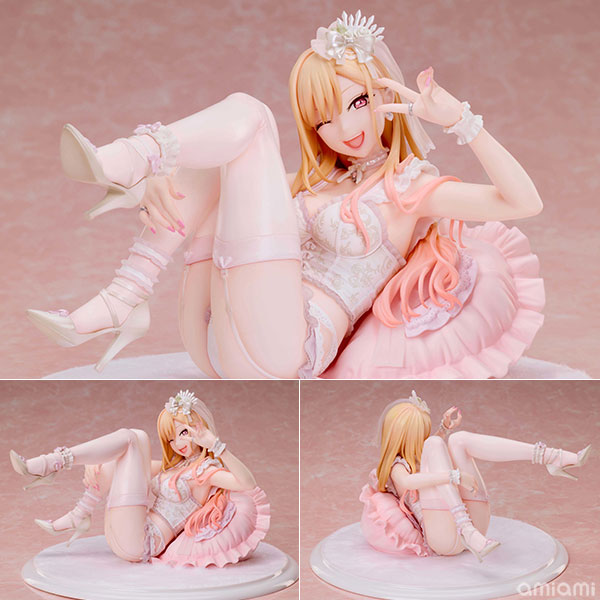 TV Anime My Dress Up Darling Marin Kitagawa Babydoll ver. 1/7 Scale Figure →
Max Factory: The Scale World Beyond figma
People know Max Factory only as the figma company, then get surprised when they encounter the scale line. The 1/7 scale lineup especially shows a different grain from Good Smile or Alter. They excel at balancing dynamism with detail. The 2015 "Sword Art Online" Asuna 1/8 processed flowing hair tips with clear parts, sculpting with light refraction in mind. A standing pose, yet you could feel wind and gravity.
Max Factory's strength lies in collaboration with original illustrators. Products directly supervised by the original artist carry an "Original Character Series" label, and this line shows virtually no discrepancy between original artwork and three-dimensional form. The 2018 figure based on Asagi Tooru's designs made headlines by translating the illustrator's characteristic brushstroke texture into three dimensions. The sculptor's capability reveals itself in the process of interpreting two-dimensional lines as three-dimensional surfaces.
The weakness is delivery schedules. Never trust Max Factory scale release dates. Six-month delays are standard; over a year isn't uncommon. The figma production line and scale line share factory space, so when new figma products pile up, scales get pushed back. The figure collector's proverb "release dates are aspirational" gets quoted most frequently with Max Factory.
Kotobukiya: Duet of Beast Girls and Mechanics
Perhaps because Kotobukiya started as a plastic model company, their scale figures often retain assembly elements. The "Megami Device" and "Frame Arms Girl" series launched in the mid-2010s blurred the line between figures and models. Joints articulate, weapons swap, and you can even mix parts between different products. Pure scale figure collectors draw a line saying "these aren't figures, they're kits," but for those who enjoy customization, this is holy ground.
In fixed-pose scales, the "Beast Girl" series shows Kotobukiya's identity. This line sculpts animal-eared and tailed girl characters at 1/8 scale, with masterful fur texture expression. A 2017 fox girl product carved each individual hair at the tail tip. The obsession with adding detail visible only under magnification characterizes Kotobukiya sculptors.
The weakness is faces. Kotobukiya scales often have excellent bodies and accessories but disappointing faces. Eye painting sometimes lacks left-right symmetry, or lip coloring gets applied too heavily, creating a doll-like appearance. Where the painted sample looked fine but production breaks down is usually the face. When preordering Kotobukiya products, checking face closeup photos from multiple angles is essential.
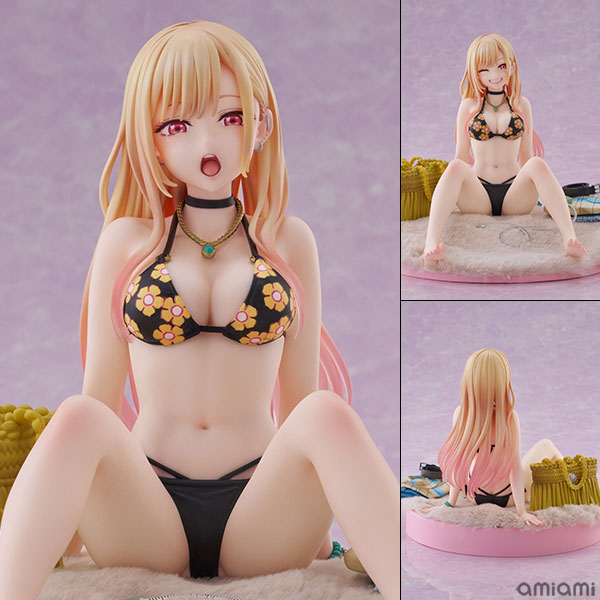 My Dress-Up Darling 1/6 Scale Figure - Marin Kitagawa (Swimwear Ver.) →
When the Sculptor's Name Becomes the Quality Label
Once you start paying attention to sculptor names on box backs, human names catch your eye before manufacturer brands. For instance, Hori Jun, regardless of which company's product he works on, characteristically renders delicate finger expression and natural weight distribution. Even in standing poses, he subtly adjusts knee and ankle angles to convey gravity. Conversely, Kawahara Kazuhiro prefers exaggerated poses and dramatic compositions. The same character sculpted by Hori Jun emerges like a slice of daily life; sculpted by Kawahara Kazuhiro, like a stage highlight.
Following individual sculptors' careers, you discover they frequently move between manufacturers. A sculptor working for Good Smile moves to Alter, then transitions to freelance and simultaneously creates products for multiple companies. That's why generalizations like "Good Smile has this feel, Alter has that feel" haven't fit well since the mid-2010s. Even products from the same company become completely different figures when sculptors differ, and products from different companies feel similar when the sculptor matches.
The path of individual Wonder Festival dealers getting recruited by companies is also common. When garage kits distributed in small quantities as event-exclusive sales receive acclaim, manufacturers scout the creator and put them on production lines. Several star sculptors emerged through this route in the late 2000s. Even now, browsing Wonder Festival dealer booths, I occasionally encounter skills that make me think "I'll be seeing this person's name on a Good Smile box in a few years."
Between Painted Sample and Production—How Far Does the Sculptor's Responsibility Extend?
The painted sample (decomaster) is a prototype hand-painted by the sculptor. Production versions are molded in factories and finished by different painting teams. Quality gaps emerge in this process. Gradation and shading especially—what had five stages in the painted sample often reduces to two in production. Hair tip clear parts that had high transparency in samples sometimes come out cloudy in production.
Sculptors are involved only through mold creation; production painting falls under the manufacturer's factory management. So even using the same prototype, final quality varies by manufacturer. Alter supervises production strictly, keeping the gap between painted sample and production small, while some smaller manufacturers often collapse at the production stage. This is why preordering based solely on the sculptor's name on the box back sometimes leads to disappointment upon receiving the actual product.
There's only one way to predict production paint quality in advance: find actual product reviews of the manufacturer's previous releases. Preordering based on painted sample photos alone is gambling. After release, check YouTube unboxing videos or community real-product photos, and if production quality looks acceptable, aim for reprints instead—that's safer. Reprints come after gauging initial reaction, so manufacturers sometimes improve the painting. Patient waiting has this advantage too.
 Azur Lane Prinz Eugen 1/7 Complete Figure →
How to Read a Sculptor's Touch: Detail Checklist
A sculptor's personality reads clearly when you focus on four areas: fingers, feet, clothing wrinkles, and hair. Fingers reveal posture and force distribution. Stiffly extended fingers are a common beginner sculptor mistake. Skilled sculptors give each finger a different angle and include joint creases. Feet are the same. The angle difference between toes touching the ground and lifted toes, tendon expression in ankles—these separate sculpting tiers.
Clothing wrinkles most clearly reveal a sculptor's sense. Wrinkles must account for gravity, wind, and movement direction to look natural. Carving lines randomly makes it look like crumpled paper, not fabric. Examining skirt lining thickness, ribbon knot structure, buttonhole depth reveals how much the sculptor observed real objects.
Hair is hardest. Animation drawings are two-dimensional, so sculptors must interpret how hair flows in three dimensions, and each sculptor interprets differently. Some sculptors carve every individual strand; others cluster into large masses to emphasize volume. Whether to process hair tips with clear parts, whether to separate accessories like hairpins into separate parts—these are sculptor choices. When multiple sculptors render the same character, comparing just hair treatment shows who thought harder.
FAQ
Can I choose figures based solely on manufacturer brand?
It worked through the mid-2010s but not anymore. Even bearing the same Good Smile logo, quality varies wildly by sculptor, and not every Alter product is a masterpiece. Checking the sculptor's name on the box back and that person's past work is more accurate. Don't trust painted sample photos alone—look up production quality reviews of products the same sculptor made previously.
Where do I check the sculptor's name?
It's printed in small text on the figure box back or side as "Prototype: ○○○" or "原型制作: ○○○." Manufacturer official pages also list it in product details, and searching figure database sites shows work history by sculptor. At Wonder Festival garage kit dealer booths, sculptor names are prominently displayed on nameplates, making it a good place to learn their touch while viewing actual pieces.
How significant is the difference between painted sample and production version?
It varies wildly by manufacturer and price range. Alter keeps the gap between painted sample and production at 5-10%, while some smaller manufacturers see gaps exceeding 30%. Differences are especially pronounced in face painting, gradation, and clear parts transparency. Don't preorder based on painted samples alone—check actual product reviews after release, then aim for reprints or buy secondhand. That's safer. First-run preorders are gambling.
When multiple manufacturers release the same character figure, which should I buy?
Look at the sculptor's name and pose first. Manufacturer brand comes second. Even the same character has completely different expressions, stances, and costume details depending on the sculptor. If you want static poses, choose realism-oriented sculptors like Hori Jun; for dynamic staging, pick dramatic-style sculptors like Kawahara Kazuhiro. Compare actual product photos after release and choose whichever has the smaller gap between painted sample and production to reduce failure probability.
---
Once you start memorizing sculptors' names, your criteria for choosing figures transforms. You read the traces of human fingertips rather than manufacturer logos, and see the sculpting philosophy beyond painted samples. Now you understand why the same character sculpted five times produces five different dolls. May good connections grace your glass cabinet today as well.