
32 Can Badges Spread Across a Hotel Bed
Thirty-two can badges were spread across the bed of a business hotel in Ikebukuro, Tokyo. At 9 PM, my feet ached from walking all day, but sleep wouldn't come. Time to simulate arrangements with the transparent-windowed bag in front of me. Should I place six versions of the same character with different expressions in symmetry, flow them in a color gradation, or fill from the center outward in order of rarity? This is the happiest dilemma that people who fill itabags experience on the first night of their pilgrimage.
Let me get straight to the point. An itabag is not simply a bag for carrying goods, but a display medium that visualizes devotion to one's oshi (favorite character). This culture, which began in Japan's female-oriented fandoms in the mid-2010s, has evolved into a unique communication method that simultaneously proves the collector's discernment and dedication through the density, arrangement, and layering of goods beyond the transparent PVC window. After its full-scale introduction to Korean fandoms in 2017, itabags have become a common sight at concert venues and cafe events, but the techniques for filling them still remain an individual matter.
The moment you fix can badges to the 3-millimeter-thick acrylic panel inside the transparent window, the bag transforms from a personal possession into a public exhibit. The badges swaying each time you grab a train handle, the holographic reflections changing with the sun's angle, the 0.8 seconds a passing stranger's gaze lingers—all these elements make the itabag not merely a storage method but a small mobile gallery.
Density Beyond the Transparent Window: Why Do People Fill Bags to the Brim with Badges?
The essence of the itabag is density. In 2015, a single photo posted by a Vocaloid fan on Niconico Douga—the front of a transparent bag packed densely with 80 Hatsune Miku badges—spread through the community, giving birth to the name "痛バッグ (itabag, painful bag)." Decoration so excessive that viewers would feel "pain." This very excess is the essence of this culture.
The community considers the state where no background is visible between densely packed badges as "complete." To fill a 250×200-millimeter transparent window area requires a minimum of 35-40 badges based on the standard 5.7-centimeter diameter can badge. The process of gathering this quantity is not mere purchasing, but becomes physical evidence of "oshi-katsu (oshi activities)." Each badge—received as a cafe event bonus, obtained by queuing at a Wonder Festival booth for doujin goods, a birthday commemoration limited edition—is a coordinate of memory connected to a specific time and place.
The higher the density, the greater the visibility of devotion. Collecting 50 badges of the same character takes an average of six months to a year. It takes longer if you insist on official goods only. The moment this time is compressed and visible beyond the transparent window, the itabag becomes not a simple decoration but a resume of fandom activities. The moment a passing stranger says, "Oh, you like that character?"—that is the completion of the communication that itabag culture has designed.
The Grammar of Arrangement: Symmetry, Gradation, and Rare Items at the Center
How to arrange can badges. There's no single answer to this question, but there are several principles repeatedly validated by the community. The first is symmetry. Symmetrical arrangement from the centerline creates the most stable and intuitive composition. Placing one badge with the same expression on each side, or mirroring color tones. This method has low failure rates even for beginners.
The second is color gradation. Arrangement that flows naturally from blue tones to purple to pink makes the entire transparent window look like a single picture. The "rainbow itabag" challenge that went viral on Twitter in 2018—collecting and arranging badges in each of seven colors in gradation—was a case of pushing this principle to the extreme. However, this method is only possible if you've secured enough badges with different costumes and expressions of the same character.
The third is rare placement at the center. A composition where the most difficult-to-obtain or personally cherished badge is placed at the very center, surrounded by regular badges. When rare items like event-limited holographic badges or first-edition bonuses are at the center, the entire itabag's "narrative" converges on that single point. Communication efficiency also increases because viewers' gazes naturally move to the center.
You can also mix the three principles. A method like placing a rare item at the center, filling the surroundings symmetrically, and fading the colors brighter toward the edges. The simulation that unfolds on the hotel bed is the process of finding this combination. The experience where the entire impression changes each time you move a single badge—this is the "puzzle-solving" enjoyment that people who fill itabags talk about.
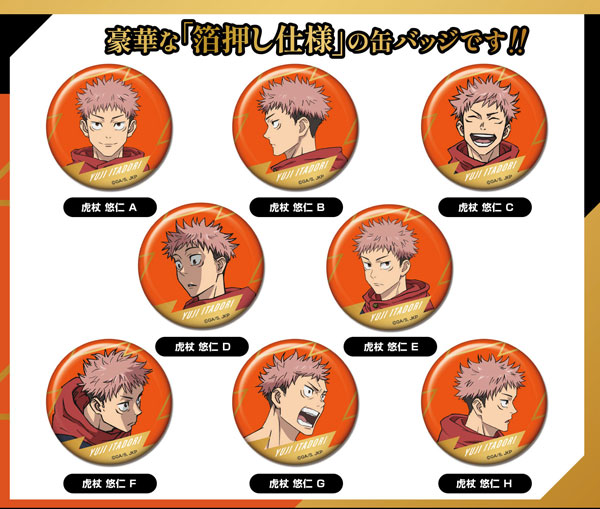 Anime "Jujutsu Kaisen" 5th Anniversary Foil CAN Badge Yuji Itadori BOX 8Pack BOX →
The Technique of Layering: Coexistence of Acrylic Stands and Badges
An important change occurred in itabag culture after 2020. The emergence of acrylic stands. As techniques spread for creating three-dimensionality by adding acrylic panels inside the transparent PVC window, itabags evolved from two-dimensional planes into 2.5-dimensional layered structures. Lay can badges on the back surface and stand acrylic stands on top of them to create front-to-back depth. The effect where badges and stands appear to overlap or separate depending on the angle gives the illusion of movement to a stationary bag.
The key to layering is thickness control. The space between the transparent window and acrylic panel is usually 5-8 millimeters. To stand a 3-millimeter-thick acrylic stand in this gap requires precise calculation of the base angle and fixing position. You use double-sided tape or transparent adhesive gel to fix the stands, but if the adhesive strength is weak, the stands topple every time you pick up the bag, and if too strong, you can't change the arrangement later. The community recommends "peel-and-stick" gel-type adhesives.
Placing large acrylic stands on the front layer and small badges on the back creates perspective. Conversely, placing large badges in the back and small stands in front makes the stands stand out more through optical illusion. Testing this combination requires being prepared for at least 3-4 rearrangements. Cases where you get a satisfactory composition on the first attempt are rare. This is why on the second night of the pilgrimage, you once again spill goods onto the hotel bed.
What It Means to Walk Carrying an Itabag: The Duality of Display and Protection
An itabag is both a display tool and simultaneously a protective device. The inside of the transparent window is a sealed space, so there's no risk of badges falling, and they won't get wet even in rain. When placing it on a cafe table, the badges don't touch the floor directly, reducing scratch concerns. If stored in a file, no one can see them, but when carried in an itabag, they're continuously displayed while you carry it around. This duality makes the itabag more than just a bag.
However, the protective function has limitations. Prolonged exposure to direct sunlight fades the printed surface of badges, and in hot, humid summer environments, the adhesive can melt and badges can stick to the acrylic panel. After a case in 2019 where three badges inside a collector's itabag became discolored after standing in an outdoor queue at Comiket for two hours was shared with the community, the habit of removing some badges or covering the bag with cloth during prolonged summer outings spread.
Another easily overlooked factor is weight. When you pack 50 can badges and 10 acrylic stands, the bag weight exceeds 1.2 kilograms. Add a wallet, phone, and tumbler, and it approaches 2 kilograms. Carrying it all day makes your shoulders ache. So veteran collectors separately prepare an "outing itabag" and a "full-set display itabag." The outing version is lightly configured with 20-30 badges, while the display version is hung on a bookshelf at home or carried only on event days.
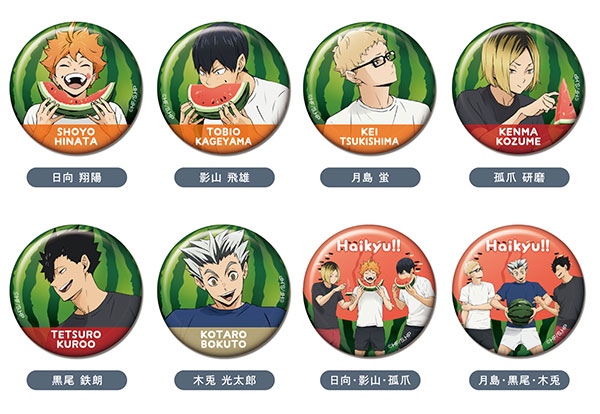 CAN Badge Haikyuu!! Watermelon Series 8Pack BOX →
Three Common Mistakes Itabag Beginners Make
The first mistake is the greed to fill the bag completely from the start. If you rush to buy and collect badges because you're embarrassed by visible empty space, there's no room when a truly desired limited edition comes out later. The transparent window can be rearranged anytime, but the work of removing already fixed badges and rearranging them is more troublesome than you'd think. Initially leaving 30 percent empty space and gradually filling it creates a more satisfying composition in the long term.
The second is neglecting to clean the inside of the acrylic panel. If you don't wipe the acrylic panel with a microfiber cloth before fixing badges, all the dust and fingerprints show through the transparent window. Adhesive marks especially are difficult to remove once they form. If you cleanly wipe both sides with glass cleaner before attaching badges and spray anti-static spray, you can reduce dust reattachment. Skipping this process produces the reverse effect where there are many badges but the overall impression looks messy.
The third is not considering the durability of the bag body. Not all bags with transparent windows are equal. Products with PVC windows attached to cloth tote bags are light, but if you keep heavy badges in them for long periods, the window sags or stitches tear. Products with windows fixed to leather or thick synthetic leather materials have higher durability. Japanese otaku goods specialty brand products are designed to withstand 80 or more badges, but prices hover around 30,000 yen, which is not cheap. For beginners, it's realistic to start with mid-to-low-priced products in the 10,000 yen range and upgrade when the badge count increases.
The Visibility of Oshi-katsu: Why Do People Take Goods Outside?
Figures go inside glass cabinets. Art books get shelved in bookcases. But itabags are carried outside. This difference makes us reconsider the boundary between "display" and "communication" in goods culture. A scale figure in a glass cabinet is a sanctuary of personal space, but an itabag is a signal that operates in public places. It's both a radar to find people who like the same character and a flag declaring one's identity.
In 2016, the hashtag "#itabag exchange meeting" trended on Japanese Twitter. It was a culture where people who liked the same character posted itabag photos and shared arrangement tips and rare badge acquisition sources. Even without physically meeting, a single itabag photo could confirm you were "comrades supporting the same oshi." In Korean fandoms too, after 2018, as tags like "#today's itabag" and "#itabagstagram" took root on Instagram and Twitter, itabags became a medium of fandom communication bridging online and offline.
Visibility sometimes acts as a burden. There are times when the gaze of the person next to you on the train feels burdensome, or you hear whispers of "what is that?" Nevertheless, the reason for carrying an itabag is that the desire to "show" is greater than the instinct to "hide." Affection for one's oshi is an individual's intimate feeling, but the moment it's expressed externally, it connects with the community called fandom. The itabag is the physical form of that connection.
 Pikuriru! Fate/Grand Order Trading Can Badge Vol.4 (Set of 10) (Anime Toy) →
Rearrangement the Day After Pilgrimage: The Time an Itabag Remembers
On the Ikebukuro hotel bed, the 32 badges had become 48 by the next night. Things collected during the day touring Ikebukuro Animate, Akihabara Radio Kaikan, and Nakano Broadway. Two cafe collaboration event bonuses, one first-edition badge salvaged from the corner of a used shop display case, three reprints of a desired expression badge. Each badge has that day's location, temperature, and excitement attached to it.
Rearrangement begins. I move yesterday's central badge to the left and place today's rare find at the very center. I readjust the color flow and slightly tilt the angle of the acrylic stand to adjust light reflection. After 30 minutes, I gaze at the completed composition beyond the transparent window. It's a different bag from yesterday. Same character, same transparent window, but the time contained inside has changed.
An itabag is an exhibit that updates. Once you buy a scale figure, it stands in the same place for years, but an itabag has new badges added once a month. Birthday cafe events, new anime broadcast commemoration goods, year-end limited editions. Every time a new badge comes in, you reconsider the entire arrangement. This repetition makes the itabag not a simple collectible but a "living collection."
The time spent rearranging badges on the bed after returning from pilgrimage is an extension of the journey. While opening the bag, taking out badges, and determining their positions one by one, the streets walked and scenery encountered that day come back to mind. An itabag is not a bag that holds goods but a vessel that holds time. The 48 badges beyond the transparent window remember 48 moments.
FAQ
What bag should I choose for itabag beginners?
Initially, I recommend a medium-sized tote bag with a transparent window area about half of A4 size (approximately 150×200 millimeters). You can fill it without gaps using 20-30 badges, giving high initial sense of achievement, and the weight stays under 1 kilogram, so there's no burden for daily outings. Synthetic leather materials endure badge weight longer than cloth materials, and products with PVC windows doubly fixed with stitching have good durability. Prices around 10,000 yen are sufficient, and upgrade to large size when badges increase.
How do I fix badges so they don't fall inside the transparent window?
The most stable method is attaching double-sided Velcro tape to the acrylic or PVC panel inside the transparent window and attaching corresponding Velcro to the back of badges. Adhesive gel or double-sided tape makes rearrangement easy but long-term fixing power drops, and strong adhesives risk damage when removing badges later. "Peel-and-stick" gel-type products (about 500 yen) sold at Japanese otaku goods stores are suitable for beginners.
How do I arrange when putting acrylic stands and badges together?
The basic approach is to arrange can badges flat on the back surface (inside of bag) and stand acrylic stands on the front (transparent window side) to create layers. Fix the stand base with transparent adhesive gel, but tilt the angle about 10-15 degrees backward to prevent toppling forward when the bag is stood up. Place large stands in the center and small badges on both sides for natural perspective, and if you make the back surface dark and front bright in color, three-dimensionality is emphasized.
How can I prevent goods inside the itabag from being damaged in summer heat?
Avoiding direct sunlight exposure is the top priority. In outdoor queues or concert venues, cover the bag with cloth or a towel, and don't leave it in the car for long periods. In hot, humid environments, adhesive can melt causing badges to stick to the acrylic panel or the printed surface to discolor. For prolonged summer outings, it's safer to remove hologram and special-print badges and insert only regular badges, and after returning home, open the transparent window to ventilate and remove internal moisture.
---
May good fortune grace your glass cabinets today as well.


