
The Paradox of "Pre-Owned" With Unopened Box Tape
Standing before a display case at a Japanese secondhand shop, I once doubted what I saw on the price tag. A 2015 Alter 1/7 scale was listed as Grade A at 60% of retail. I picked up the box—not a speck of dust on the corners. Not even a trace of tape residue. An item that would have sold as "unopened new" in Korea sat in the pre-owned section. When I asked the cashier, the answer came back: "Even if unopened, once time passes after purchase, it's pre-owned." That day, I picked up the first piece of understanding how Japan's secondhand market operates.
Let me state the conclusion upfront. The high quality of Japan's secondhand figure market comes not from the precision of the grading system, but from the culture behind it. It's a structure where habits of preserving boxes, a temporal concept that treats opened items as used, and inspectors' sense of responsibility all interlock. This article digs beyond how to read grade charts into why the system works.
How Do You Read Pre-Owned Grade Charts?
Most Japanese secondhand shops use a four-tier system of S·A·B·C grades, and while detailed criteria vary by retailer, the broad framework is consistent. S grade means unopened and unused condition, A grade means opened but no visible damage to figure or box, B grade indicates box dents or minor scratches on the figure, and C grade signifies missing accessories or clear breakage. Even within the same A grade, depending on the shop, detailed conditions like "allows up to 1cm corner damage on box" or "dust removal completed after figure inspection" may be attached.
The problem is that these grades feel one tier higher by Korean standards. When an A-grade figure I bought from a Japanese mail-order site arrived, even the cushioning material inside the box remained in its original position. Compared to items marked "excellent condition" in Korean secondhand transactions, the experiential difference was clear. This gap comes not from grade criteria but from differences in inspectors' baseline standards. Japanese secondhand shop staff take responsibility for the grades they assign. The structure directly ties return rates to individual performance evaluations.
Supplementary descriptions attached to grades also matter. Phrases like "slight sun fading on box," "tape residue present," or "instruction sheet creased" are noted on price tags. When I bought a B-grade Nendoroid from a Japanese secondhand shop in 2018, a 2cm corner dent on the back of the box was specified with photos on the detail page. Upon receiving the actual item, there was truly nothing wrong except that dent. The culture of recording conditions down to the millimeter—what would have been dismissed as "slight box damage" in a single line in Korea—builds trust.
Why 10-Year-Old Out-of-Print Items Remain Like New
A particular Goodsmile Company scale released in 2012 appeared in a secondhand shop as Grade A in 2023. Eleven years had passed, yet the clear parts showed no yellowing and the painted surfaces had no stickiness. Had a figure been stored in Korea for the same period, at minimum the box paper would have absorbed dampness or dust, but this item was different. The secret lies in the storage environments of Japanese collectors.
In Japanese figure communities, discarding boxes is viewed as "value destruction." This is because resale potential is kept in mind. Boxes are essential storage tools for blocking direct sunlight and preventing dust. In fact, even prize figures released in the mid-2000s circulate in the secondhand market when stored with their boxes. The culture's sensitivity to humidity control also plays a role. Many collectors place desiccants inside boxes or use secondary storage in sealable plastic cases.
Indoor environments with minimal temperature fluctuation cannot be ignored either. Japanese living spaces often maintain constant temperature with air conditioning even in summer. PVC material releases plasticizers above 30°C, causing stickiness or discoloration, but when stored long-term in such environments, damage remains minimal even after 10 years. This is why an Alter figure released in 2010 that I purchased secondhand in 2020 still had living luster on its painted surfaces.
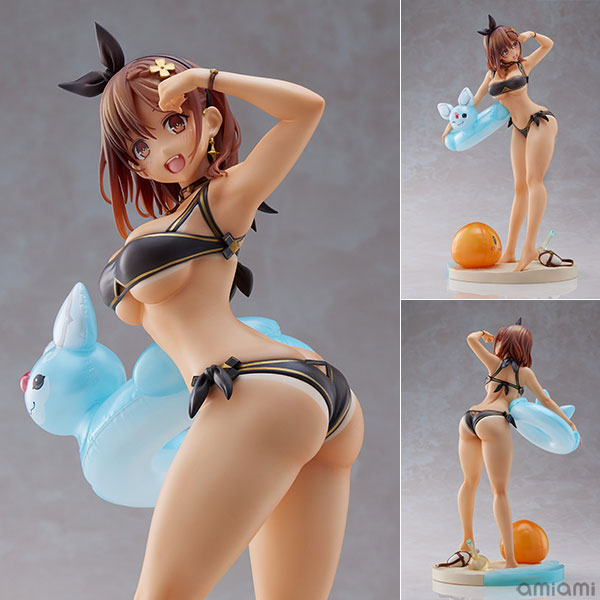 Atelier Ryza 2: Lost Legends & the Secret Fairy 1/6 Scale Figure - Ryza (Black Swimwear/Tanned Ver.) by Spiritale →
The Temporal Concept Where Opening Equals Pre-Owned
In Korea, we call it "like new" if it was displayed once and put back, but Japan differs. The moment a box is opened, it's pre-owned. Even one day on a display case makes it pre-owned. This standard seems harsh but gives the market transparency.
I've actually seen figures on Japanese mail-order sites classified one grade below S with descriptions like "only opened for confirmation." By Korean sensibilities it's new, but the shop listed it as pre-owned. From a buyer's perspective, this honesty is appreciated. Just seeing the "pre-owned" label confirms whether it was opened. Conversely, an S grade marking means the tape is intact. There are no ambiguous boundaries.
This temporal concept reflects in pricing as well. A-grade figures opened immediately after release trade at 80-90% of retail, while unopened S-grade items after one year sell at retail or with premiums. This is because the scarcity of unopened items increases over time. There was a case where a particular Nendoroid released in 2019 sold 20% above retail when it appeared unopened in 2023. A price paid for the patience of not opening the box for four years.
The Touch of Secondhand Shop Inspectors
When Japanese secondhand shop staff receive figures, they inspect from box to figure body following checklists. Condition of all six box faces, presence of tape marks, instruction sheet creasing, figure part separation, paint peeling, clear part yellowing, and accessory count verification are standard. Through this process grades are assigned and prices set.
When I bought a B-grade Figma from a secondhand shop in 2017, the detail page explained that one wrist joint part was missing. Upon receiving the actual item, it was truly perfect except for that part. What would have been bundled as "some accessories missing" in Korea specified exactly which part was absent. This precision builds trust. Because inspectors physically handle figures and count parts.
Some retailers photograph inspections and post them online. Close-up photos of dented box sections, photos of the figure body from multiple angles appear on product pages. When viewing a C-grade scale at a Japanese secondhand shop in 2020, along with an explanation of 1cm paint peeling on a hair part, five enlarged photos of that section were posted. Thanks to this transparency, even C-grade can be purchased with confidence. If only predictable damage exists, it's a rational transaction for the price.
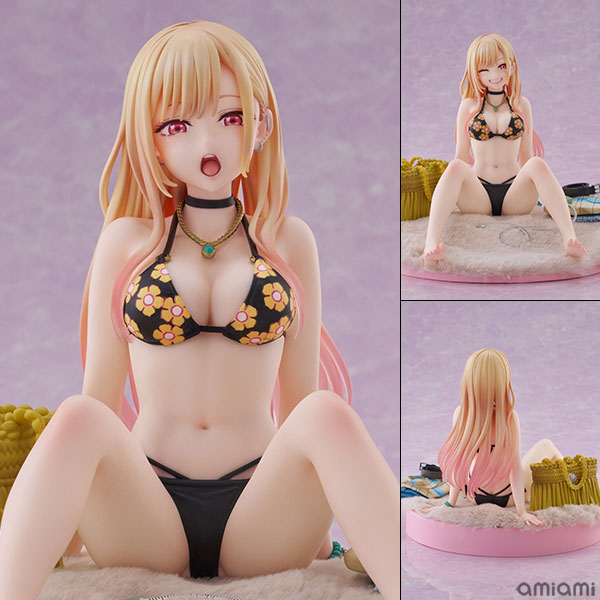 My Dress-Up Darling 1/6 Scale Figure - Marin Kitagawa (Swimwear Ver.) →
The Art of Hunting Out-of-Print Items
For discontinued scale figures, the secondhand market is the only route if there's no reissue news. A significant number of popular character scales released in the early 2010s are already in unreproducible status. Even when prototype data remains, reissues get blocked for reasons like expired licensing agreements with manufacturers, prototype artists changing jobs, or paint process subcontractor closures.
Finding discontinued items in Japan's secondhand market requires patience. Some collectors search timed to early morning inventory updates daily. Popular discontinued items sell within hours of listing. A particular Alter scale Grade A posted at a secondhand shop in 2018 was registered at 4 AM and sold out by 9 AM. Five hours. Considering Japan's time difference puts Korea at a disadvantage.
Prices follow market rates. Popular discontinued items trade at 150-200% of retail. A particular Goodsmile scale released in 2014 sold at 180% of retail in the 2022 secondhand market. This was because there had been no reissue news for eight years and the fandom remained alive. Conversely, discontinued items from works that have lost popularity sometimes drop below retail. Demand determines price more than discontinued status.
Why Japanese Pre-Owned Shipping is Perfect Too
When ordering figures from Japanese secondhand shops, the packaging differs. Boxes are wrapped in three layers of bubble wrap, shock-absorbing cushioning attached to all six box faces, and gaps inside the shipping box filled with newspaper or air cushions. When I ordered a scale figure from a secondhand shop in 2016, opening the shipping box revealed another layer of vinyl inside. It was for moisture protection.
This packaging culture aims to prevent complaints. Since damage during shipping is the retailer's responsibility, they ship as safely as possible. In fact, having ordered dozens of times from Japanese mail-order sites, I've never experienced box crushing during delivery. The experiential difference is large compared to Korean courier services. Of course, the story changes when going through package forwarding services. Forwarder staff packaging quality varies wildly.
Delivery speed is slow. Even domestic Japanese shipping takes 3-5 days, and for overseas direct purchases 1-2 weeks is standard. When I ordered via EMS from a secondhand shop in 2019, I received it 10 days after payment. Expecting fast delivery leads to disappointment. But seeing the condition of arrived items makes the wait understandable. Slow but certain delivery sustains trust in Japan's secondhand market.
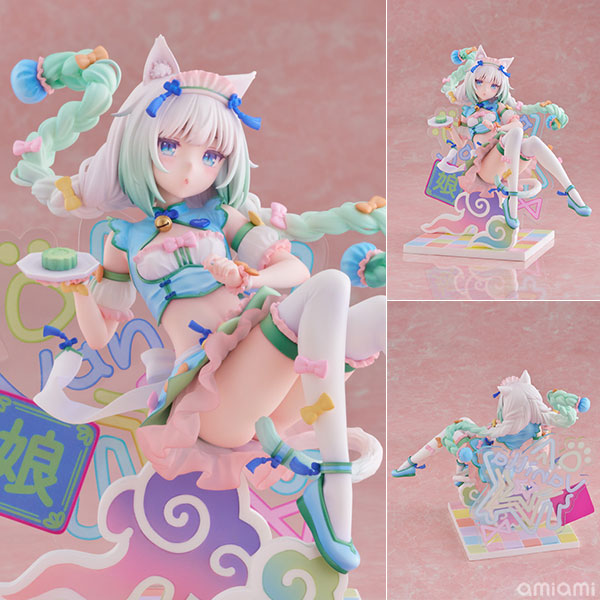 Vanilla Dreamy Cute China Ver. 1/7 Scale Figure →
The Virtuous Cycle Created by the Secondhand Market
Japan's secondhand market interlocks with the new figure market. Collectors keep in mind the possibility of eventually selling as pre-owned even when buying new figures. This is why they preserve boxes well and handle figures carefully. When figures maintained this way enter the secondhand market, they're delivered in good condition to the next collector. The circulation is healthy.
This virtuous cycle sustains figure culture as a whole. When discontinued masterpieces continue trading in the secondhand market, new fans also gain opportunities to experience past works. Like a novice collector who bought a 2015-released scale secondhand in 2023, fell for that character, then pre-ordered the latest Nendoroid. Pre-owned creates new demand.
Conversely, unlicensed resin bootlegs harm this circulation. If profits don't return to legitimate manufacturers, momentum for new production drops and the livelihoods of prototype artists and painting technicians become precarious. The secondhand market is an extension of legitimate distribution. It's a structure where legitimately produced items continue their value passing through multiple hands. I advocate for this structure.
FAQ
How can I buy Japanese pre-owned figures from Korea?
Order directly from Japanese mail-order sites or use package forwarding services. Direct orders require confirming overseas shipping availability, while forwarding services receive items at Japanese domestic addresses then re-ship to Korea. Payment uses PayPal or credit cards. Calculating shipping costs and customs duties (when taxable value exceeds 150,000 won) in advance prevents unexpected expenses. Even for a 20,000 yen figure, adding shipping and customs often results in an additional 30,000-50,000 won.
How much does the price difference between pre-owned grades A and B amount to?
For the same figure, the price difference between A and B grade is usually around 20-30%. B grade often has box dents or minor scratches on the figure body but no major functional or appearance issues. Since boxes aren't visible when displayed in glass cases, if only the figure body condition is acceptable, B grade is a reasonable choice. In fact, I've had a scale bought as B grade in my display case for five years and can't distinguish it from A grade. If budget is tight, starting your search from B grade is also a method.
Is there absolutely no possibility of reissuing discontinued figures?
Reissue possibility depends on manufacturer and licensor circumstances. Popular characters sometimes get reissued 5-10 years later. Goodsmile Company occasionally reissues past popular works, while Alter prefers releasing the same character with new sculpting rather than reissues. It's frustrating when a reissue announcement comes after buying a discontinued item at high prices, but reissues are wishful thinking, not promises. If you can wait, hold out; if you want it right now, buying pre-owned is the correct answer.
Can figures bought from Japanese secondhand shops receive after-sales service?
Pre-owned figures are not eligible for manufacturer after-sales service. Even legitimate new products become difficult to service after a certain period post-purchase, and pre-owned should be considered without warranty from the point of purchase. However, secondhand shops have their own return policies. If items arrive in different condition than described, returns are often possible within one week. Damage is the retailer's responsibility; disliking it is your responsibility. Carefully reading detail pages and grade descriptions before purchase is the only defense.
---
When first encountering Japan's pre-owned figure market, the grade charts seem complicated, but after buying a few times you become accustomed to their honesty. I came to trust Japanese collecting culture when I met a 10-year-old discontinued scale secondhand and saw even the styrofoam inside the box remained in its original place. The discontinued item you seek may be waiting for you in someone's display case. May good connections reach your display cases today as well.