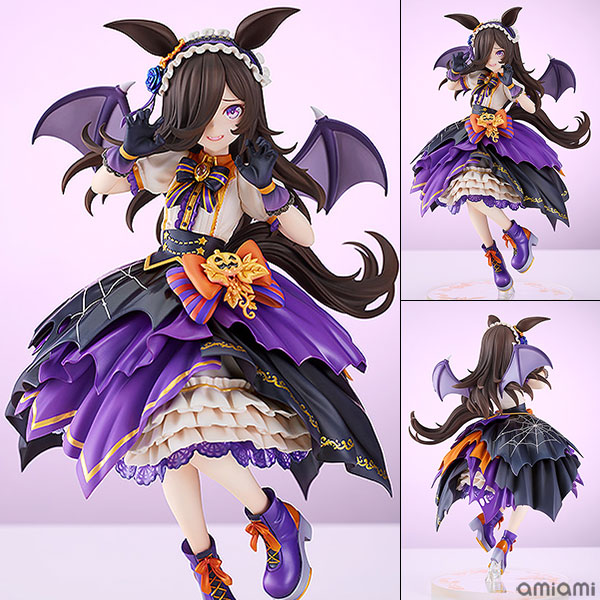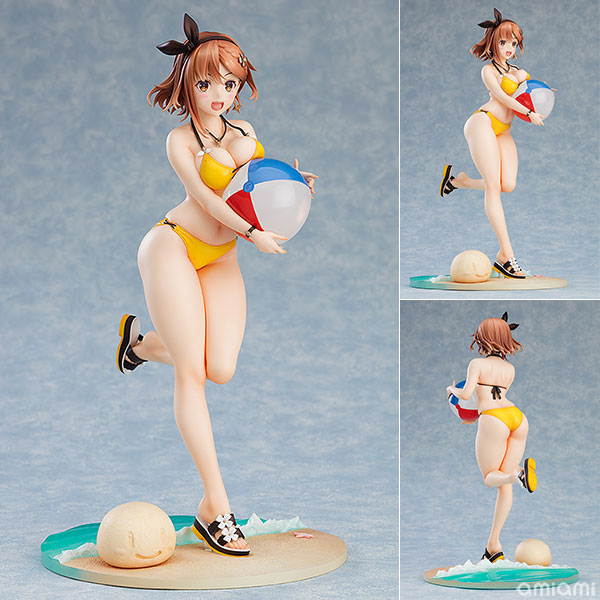
From Sega UFO Catcher Prizes to 20,000 Yen Scales: Why Does the Same Character Sell for Ten Times the Price?
Let me get straight to the point. The essential difference between scale figures and prize figures is not price. It's the difference in production methods, distribution channels, and who they're made for. The Hatsune Miku prize figure I first held in 2007 as a crane game prize at an arcade was 800 yen, but to me it was treasure. Only after I reserved a 1/8 scale of the same character for 12,000 yen did I realize: these were different objects from the start.
Prize figures are planned as crane game (UFO catcher) prizes for Japanese arcades. Amusement companies like Sega, Taito, and Banpresto place large orders, and manufacturers squeeze out maximum quality within a fixed unit price. In Japan, after being distributed as prizes, they typically pile up in secondhand shops in the 500-1,500 yen range. In Korea, they circulate through direct importing or surplus stock imports in the 10,000-20,000 won range. Scale figures, on the other hand, are produced in small quantities targeting collectors from the outset. The sculptor's name is printed on the box, and after the decorated master is revealed, reservations are taken to determine production volume. Release prices typically exceed 10,000 yen, commonly reaching the high 20,000 yen range.
This difference shows even before opening the box. Prize figures come in vinyl blister packaging with a simple base; scales come in thick cardboard boxes with layers of blisters and cushioning materials inside. The weight differs from the start. But the prejudice that "prize figures are cheap junk" was shattered after the mid-2010s. Sega's Prize SPM series and Banpresto's EXQ series began showing finish quality in facial painting and costume details that exceeded low-end scales. Conversely, there are mass production items that are scale in name only yet betray their decorated masters. Categories are just starting points—the quality of the finished product in your hands must be judged item by item.
1/8, 1/7, Non-Scale: What the Word Scale Actually Means
The name "scale figure" comes from scale ratios. It means sculpting at a ratio that reduces the character's canonical height to 1/7 or 1/8. A character with a canonical height of 160cm becomes approximately 20cm tall at 1/8 scale. Manufacturers mark the front of the box with something like "1/7 scale," and this number becomes a reference point for collectors to gauge display cabinet arrangements. Collecting the same 1/7s together preserves the proportional relationships between characters' body types.
But in practice, "non-scale" is also common. These are sculptures that prioritize posing and costume volume over canonical height. Characters with spread wings, poses holding massive weapons, and costumes with wide skirt volumes lose presence at exhibition booths if strict scale is maintained. In such cases, sculptors maintain only the "feel" of around 1/7 while adjusting proportions. The box either says non-scale or omits scale marking entirely. Products like Good Smile Company's Hatsune Miku Magical Mirai 2017 ver. are representative. Including the base, they exceed 30cm, but the actual body proportions appear around 1/8.
Beginners who believe "1/8 is the most common" and try to collect only 1/8 end up frustrated. Even among 1/8s, actual height varies from 18cm to 25cm depending on base height and posing. Standards differ by manufacturer too. Alter is known for maintaining scale ratios relatively strictly, while Max Factory freely adjusts with posing as priority. Rather than blindly trusting the numbers, checking the total height figures published on product pages is more accurate.
Why Aren't Nendoroid and Figma Considered "Scale"?
Nendoroid is a 2-3 head-tall deformed articulated figure brand that Good Smile Company has developed since 2006. Height is fixed at approximately 10cm, and the head-to-body ratio is SD style that extracts only cute elements from character designs rather than realistic human proportions. Joints are built into the neck, shoulders, waist, and limbs, and you play by swapping multiple face parts and wrist parts. There's no scale concept at all, so they're not classified as scale figures. Instead they fall into the "articulated figure" or "deformed figure" category.
Figma is a proportional articulated figure line the same company launched in 2008. Height is around 13-15cm, larger than Nendoroid, and the sculpting preserves the original character's proportions rather than 2-head-tall style. Double joints throughout the body enable sitting, kneeling, and combat poses. Besides face and wrist parts, they include weapons and effect parts to encourage photography play. If scale figures are "objets d'art for appreciating sculpture," figma are "action figures you play with by changing poses." Manufacturers mark boxes as "non-scale," but among collectors they're treated as an entirely separate genre.
Both brands have rapid release cycles and broad work coverage, so beginners often start with Nendoroid or figma before scales. Prices in the 4,000-6,000 yen range are about half that of scales too. But the exposed joints characteristic of articulated figures, risk of losing parts, and dependence on stands are completely different experiences from scale figures. If you're just going to stand them in a display case for viewing, there's no real reason to buy articulated figures, and conversely if you'll be changing poses and taking photos daily, scales are inconvenient. They're not substitutes but objects with different purposes.
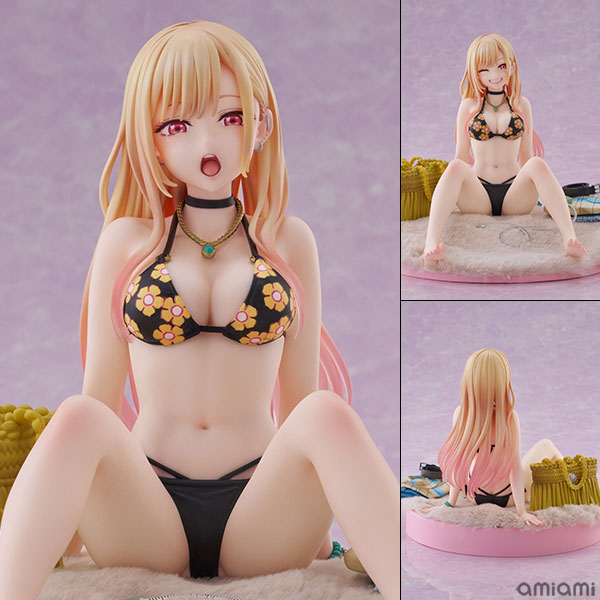 My Dress-Up Darling 1/6 Scale Figure - Marin Kitagawa (Swimwear Ver.) →
The Gap Between Decorated Masters and Production Samples: What You Must Check Before Reserving
In 2009, my first scale figure reservation was decided by a single decorated master photo posted on the Good Smile Company website. The gradation of skirt pleats, transparent parts at hair tips, eye highlights—everything was perfect. The production sample I held six months later was different. The inside of the skirt was painted in solid color, transparent parts were replaced with opaque plastic, and the eye printing was 0.5mm misaligned. The lesson I learned that day remains valid: decorated masters are not promises but target goals.
A decorated master (decor master) is a color sample completed by a professional painter hand-brushing stroke by stroke on a prototype sculpted by the original sculptor. Manufacturers display this decorated master at exhibitions like Wonder Festival and photograph it for reservation pages. The problem is the mass production process. At factories, they create mass production molds based on the decorated master, then go through painting processes on injection-molded parts. During this process, details get crushed, paint layers are reduced, and part separation lines become prominent. Expecting hand-work at decorated master level on a production line stamping out ten thousand units is unreasonable from the start.
Some manufacturers have large gaps, others small. Alter is known for having the industry's smallest gap between decorated masters and production samples. Conversely, some smaller manufacturers have incidents where gradations shown in decorated masters disappear entirely in production. What to do before reserving is clear: find production sample unboxing reviews in Japanese communities or Korean figure cafes. Searching keywords like "unboxing," "レビュー," or "開封" will turn up real product photos. Reserving based only on decorated master photos is similar to buying lottery tickets. You might win, but you won't be disappointed if you lower expectations by half.
Sculpting and Painting: Which Should You Look At First?
Figure quality divides into two axes: sculpting and painting. Sculpting is the sculptor's domain. Facial contours, body proportions, clothing wrinkle flow, finger joint details belong here. Painting is the process of applying color on top, with gradation, shading, and gloss treatment as core elements. Beginners can't distinguish between them and lump everything together as "this figure has good quality," but experts evaluate separately: "sculpting is excellent but painting is disappointing" or "painting compensated for sculpting deficiencies."
The starting point for appreciating sculpting is silhouette. Rotate the figure 360 degrees looking for balance that doesn't collapse from any angle. If it's a pose with a fluttering skirt, check whether the fabric flow follows gravity and wind; if hair is streaming, whether each strand has independent directionality. Hands are the most difficult area. If each finger bends naturally and nails are carved separately, it's evidence of the sculptor's high skill. Conversely, if hands are blunt or fingers are fused, it's traces of compromise at the sculpting stage.
Painting must be viewed under light. Check whether skin tones have gradation, whether hair has highlights and shadows layered in. High-end products airbrush rouge on cheeks and treat the inside of lips with darker colors to bring out three-dimensionality. For costumes, gloss is adjusted according to fabric material. Leather jackets get semi-gloss treatment, cotton t-shirts get matte, satin ribbons get gloss treatment. The gap between prize figures and scales is stark in the number of paint layers. Prize figures have one or two shadow layers over base color; scales create depth by overlaying five or more layers.
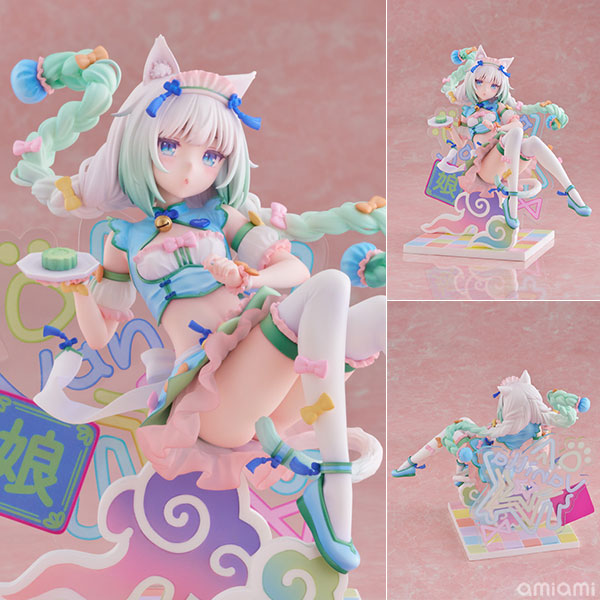 Vanilla Dreamy Cute China Ver. 1/7 Scale Figure →
Display Case Space and Sunlight: Basics of Figure Storage
Let me get straight to the point: direct sunlight is the natural enemy of figures. In summer 2012, the face of one figma I'd placed on a windowsill shelf yellowed in three months. When ABS plastic is exposed to ultraviolet light, chemical bonds break and yellowing begins. Once discolored, plastic cannot be restored. Since that day, all my display cases are against the wall opposite windows.
Display cases are fundamental for figure storage. They block dust infiltration, regulate humidity to some degree, and protect from cats or children's hands. Front-glass bookcases like IKEA's Detolf are popular with beginners, but the problem is that sides and top are also glass. If sunlight seeps through the side facing windows, it's useless. Position them where sunlight doesn't directly hit, or replace curtains with UV-blocking products. Some collectors attach opaque sheets to display case sides. It looks stuffy but is rational considering figure longevity.
Humidity is recommended between 40-60%. Too dry and decal stickers lift; too humid and mold grows inside boxes. During rainy season, place dehumidifiers in lower display case compartments; during winter heating, run humidifiers. Collectors who store in boxes: don't stack boxes horizontally, store them upright. When crushed by weight, blisters get dented leaving marks on internal parts. A 15-year veteran collector's display case is not exhibition space but a preservation facility. Safety takes priority over beauty.
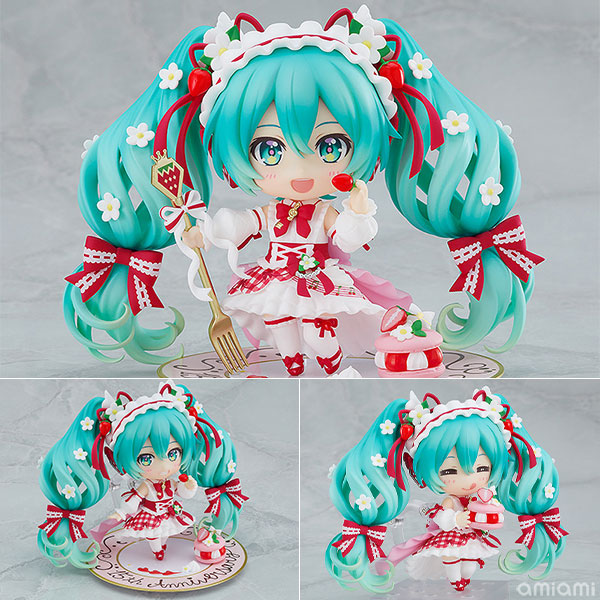 Nendoroid Character Vocal Series 01 Hatsune Miku: 15th Anniversary Ver. →
Prize or Scale: What Should You Buy First?
The question beginners ask most: "Should I buy a prize figure or scale figure first?" My answer: "Buy both, but follow the order." Start with prize figures to first build experience owning character figures, then move to scales to feel the difference in sculpting and painting. If you reserve a 20,000 yen scale from your first purchase, you'll either get burned by decorated master gap, or if it doesn't match your taste, you'll be burdened by reselling it and end up leaving it alone.
Prize figures have low burden even if you fail. Buy a product in the 10,000 won range, open the box, stand it in a display case, appreciate it from changing angles, try taking photos—the entire process is education. You can confirm whether this character is really your taste, whether this pose suits display, whether this size fits your space. When you've collected about three pieces and think "I want this character in better quality," that's when you reserve a scale. Since you've already grasped pose preferences through prize figures, you develop the discernment to choose among multiple scale products.
Nendoroid is another route. If you have a personality that likes articulated figures, skipping scales and following the Nendoroid and figma lines is also a method. If you enjoy pose play, photography, and parts combinations, scale's static appreciation might feel frustratingly restrictive. Among my acquaintances is a collector who's collected over 300 Nendoroids for ten years. Not a single scale, but their display case is fulfilled. There's no right answer. What matters first is knowing how you want to treat figures—whether you're the appreciative type or the play type.
FAQ
Do prize figures also get premium pricing later?
They do. Especially early prize figures of popular characters or event-limited color versions trade at 2-3 times retail price several years after discontinuation. But they don't surge as much as scales. Prize figures have a structure where reproduction is relatively easy, so manufacturers sometimes reprint based on demand, and when a similar-pose follow-up version is released, older version prices can drop. If investment is your purpose, scale limited editions are safer than prize figures, but figures aren't stocks to begin with.
Is it okay to throw away the box?
If display is your only purpose and you have absolutely no intention of reselling, you can throw it away. But figure tastes can change in five years, and moving, decluttering, and emergency cash-out situations come without warning. Without the box, prices drop to less than half when selling secondhand. By Japanese secondhand shop standards, no box (箱なし) drops the grade one or two levels. If space is limited, fold boxes flat for storage, or at minimum keep blisters and instruction sheets. They're essential for repacking the main body.
Where can I check decorated master photos?
Manufacturer official websites are first priority. Good Smile Company, Alter, Max Factory and others post decorated master photos from multiple angles on product pages. Right after exhibitions like Wonder Festival, booth photos taken by attendees flood Twitter (X) and communities—these photos are closest to real products. Lighting and angles vary, so you need to compare multiple shots. Production sample reviews start appearing on Japanese blogs and YouTube 2-3 days after release dates. Have patience and wait.
How do I clean figure dust?
Dust off with a soft brush or makeup brush. Wet wipes or cloths are prohibited as they risk stripping paint. For thin parts like hair, blow dust away with a camera lens cleaner blower (air blaster). Storing in display cases reduces dust accumulation, but still take them out for inspection about once a year. If dust gets stuck in joint areas, articulation becomes stiff, and if dust accumulates in base joints, figures tilt. Cleaning is an extension of appreciation.
---
May good encounters reach your display cases today as well.