The Scene Where Out-of-Print Scales from 2015 Still Sell as Grade A
When you dig through the online displays of Japanese secondhand shops, you encounter a strange phenomenon. A scale figure released in 2015 is listed at 70% of its original retail price with the description "Grade A unopened, box opened only," and when you zoom in on the photos, there's not a single scratch on the box corners. What's even more surprising is that this isn't an exception. Out-of-print items from the early 2010s circulate still sleeping inside their blisters, and buyers take this condition for granted. When newcomers to direct purchasing from Japan first open the used section of mail-order sites and wonder in confusion "It's secondhand, but why does it look new?"—it's because of the gap with Korea's secondhand market.
Let me state the conclusion first. The reason Japan's secondhand figure market operates this way is due to three interlocking factors. First, a standardized system that breaks down condition into alphabet grades like S, A, B, C and immediately reflects them in pricing. Second, appraisal standards that strictly distinguish signs of use, such as "even if opened, it's Grade A if only displayed." Third, a collector culture that doesn't discard boxes in the first place and stores items away from direct sunlight. These three elements have accumulated for over 30 years to create the ecosystem that Korean fandom envies—where "even decade-old figures can be bought like new."
I remember when I first direct-purchased an out-of-print scale from a Japanese secondhand shop in 2012, I was suspicious: "They say it's used, but why isn't there a speck of dust on the box?" When I unwrapped it, even the foam inside the blister was white without discoloration, and there wasn't a single fingerprint on the clear parts at the tips of the figure's hair. That's when I realized. This wasn't simply "well-maintained used goods"—it was a system that was different from the storage stage onward.
What the Alphabet Grading Chart Tells Us: The Language of Condition
The first thing you need to learn in Japan's secondhand figure market is the grading chart. S-grade is unopened new product, A-grade is opened but only displayed with all accessories and box complete, B-grade has slight dents or stains on the box but the main body is good, C-grade has severely damaged boxes or missing accessories—roughly divided into 4-5 tiers like this. While detailed standards differ by vendor, the core is the same: condition is judged by checklist, not subjectivity.
In fact, if you look at major secondhand shops' product description fields, they record damage down to the millimeter: "1cm scratch on lower right corner of box, blister opening marks present, no paint abnormalities on main body, all accessories included." This transparency creates trust. It's the exact opposite of the vague "good condition" platitudes used to evade in Korean secondhand transactions. When the grade drops one level, the price immediately falls 20-30%, so sellers have no choice but to be honest.
I once bought a B-grade scale and was disappointed that the box corner dents were worse than expected. But when I looked at the product description photos again, they had uploaded a close-up of exactly that part. The problem was that I hadn't read it. After that day, I came to read the grading chart like scripture.
The Conditions Under Which "Opened but Grade A" Holds
This is the point where novice direct purchasers get most confused. "It's been opened, so why is it Grade A?" In Korea, the moment you open something it's treated as secondhand, but in Japan it's different. Even if you've opened the box and displayed the figure in a glass cabinet, if you've stored the blister and accessory bags well and there's no damage to the main body, it's Grade A. The key is the distinction between "signs of use" and "signs of storage."
Japanese collectors wear gloves or at least wash their hands when taking out figures. When placing them in a glass cabinet, they measure the angle of direct sunlight, and when moving them, they return them to the original blister for storage. When these habits accumulate, even a figure displayed for three years maintains an "almost new" condition without paint degradation or dust accumulation. The saying in Korean fandom that "Japanese secondhand is trustworthy" comes from this cultural soil.
I remember a scene I witnessed while touring Nakano Broadway the day before Wonder Festival in 2018. A secondhand shop owner was inspecting a newly arrived scale, measuring the box corners with a ruler and peering at the foam inside the blister as if with a microscope. That meticulousness determines the grade, and the grade determines the price. It's a process, not a guess.
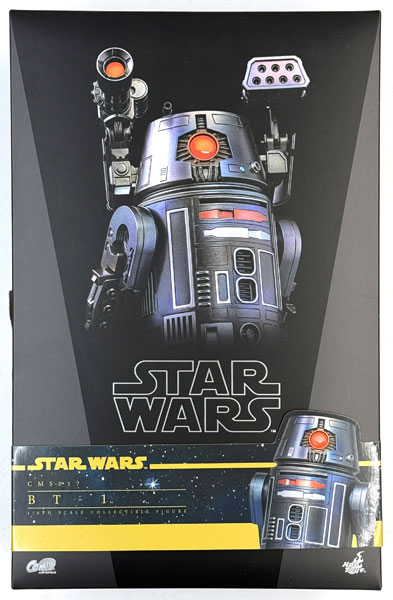 Comic Masterpiece Star Wars 1/6 Scale Figure BT-1 (Toy Sapiens Exclusive) →
The Circulation Structure Created by the Culture of Not Discarding Boxes
The reason Japanese otaku don't discard boxes isn't simply "to get a better price when selling later." It's because of the perception that the box itself is part of the work. The package illustration, the setting drawings on the back, the photo spots inside—all of these are designs that production costs went into. The logic is that discarding the detailed 360-degree shots printed on the back of a Good Smile Company scale box is like tearing out half of an art book.
This habit creates a virtuous cycle in the secondhand market. When boxes are intact, resale prices are high, and because high prices are maintained, people store them more carefully, and because well-stored products come on the market in large numbers, the overall quality of the secondhand market rises. In Korea, by contrast, many people discard boxes thinking "I'm not going to sell it anyway," then later try to sell and end up giving it away for a pittance because there's no box, which leads to treating things more carelessly—a vicious cycle that repeats.
When I first saw the secondhand corner of a major Japanese hobby shop in 2014, what shocked me was that there were almost no "no box" items. Among hundreds of secondhand scales on display, only about five were missing boxes, and even those had a separate note saying "main body in excellent condition." Collectors know that without a box, it's hard to sell.
Why the Out-of-Print Premium Market Works Healthily
In Japan's secondhand market, out-of-print scale premiums are more predictable than in Korea. If an Alter 1/8 scale released in 2012 has risen from a retail price of 12,000 yen to the current 18,000 yen, you can actually buy it in Grade A condition at that price. In Korea, people say "It's out of print so I'm charging a lot" while the box is crushed and an accessory is missing, but in Japan, condition matching the premium price comes with it.
The reason is supply volume. Because Japan's domestic market is large, out-of-print items steadily come out as secondhand. Searching just one vendor will turn up three or four Grade A units of the same model in stock, with prices similarly set around 15,000-19,000 yen. Because there's competition, it's hard to profiteer, and sellers have no choice but to compete on condition. It's not the structure where people charge outrageous prices saying "I'm the only one with this out-of-print item" like in Korea.
In 2016 I missed a limited edition Nendoroid, then three years later bought it from a Japanese mail-order site as Grade A for 1.5 times the retail price. Even the barcode sticker on the side of the box was intact, and the tweezers for changing face parts were still sealed. That's when I realized. This market is infrastructure that connects "people who need to sell urgently" and "people who will buy someday" across a time gap.
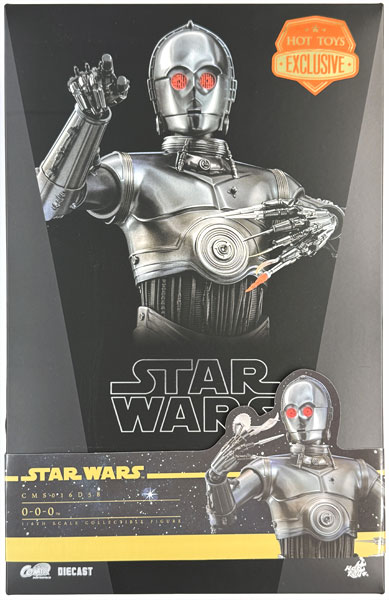 Comic Masterpiece DIECAST Star Wars 1/6 Scale Figure 0-0-0 (Toy Sapiens Exclusive) →
Transparency of Appraisal Standards: Why Even C-Grade Sells
What's interesting is that C-grade products also get traded. Even if the condition is poor—"box severely damaged, some accessories missing, paint chipping on main body"—if you specify that and list it at 30-40% of retail price, it sells. Because there's definitely demand like "I only need it for display so the box doesn't matter" or "I'm using it as a base for customization so I don't need accessories."
In Korea, if you list secondhand goods in poor condition, you get comments like "Who would buy this," but in Japan, as long as the grade and price match, it gets traded. The seller doesn't hide the damaged parts and uploads 10 photos, and the buyer looks at them and judges. The basis of trust is reducing information asymmetry.
The most extreme case I saw was a C-grade scale described as "base broken, arm parts lost, no box." An item with a retail price of 15,000 yen was listed for 3,500 yen, and a few days later it had a "sold" tag. For someone, that condition at that price was exactly what they needed. The grading system isn't a proposal to trade garbage, but to assign appropriate prices to all conditions.
Pitfalls That Novice Direct Purchasers Easily Miss
There's a common mistake made by those attempting Japanese secondhand direct purchase for the first time. Thinking "If it's Grade A it must be perfect." Even Grade A is "opened after display," so there may be blister tape marks, and there may be slight dents on the box corners. Many people get disappointed when it differs from expectations because they bought based only on the grade without scrolling through all the product description photos.
Another is not considering shipping fees and customs. Even if a scale listed at 8,000 yen in a Japanese secondhand shop looks cheap, if you add forwarding service fees of 2,000 yen plus international shipping of 3,000 yen plus Korean customs of 1,500 yen, the total is 14,500 yen. If a Korean direct purchase shop is selling new stock at 16,000 won, you need to recalculate whether secondhand direct purchase is actually a gain. Unless it's an out-of-print item, it could actually be a loss.
I remember in 2017, caught up in the fantasy that "Japanese secondhand is unconditionally cheaper," I bought without calculating shipping fees, then had a meltdown when I saw the total after arrival. The figure itself was Grade A, but the total expenditure exceeded the domestic new product price. After that day, I developed the habit of organizing by item in an Excel sheet. Secondhand direct purchase is arithmetic.
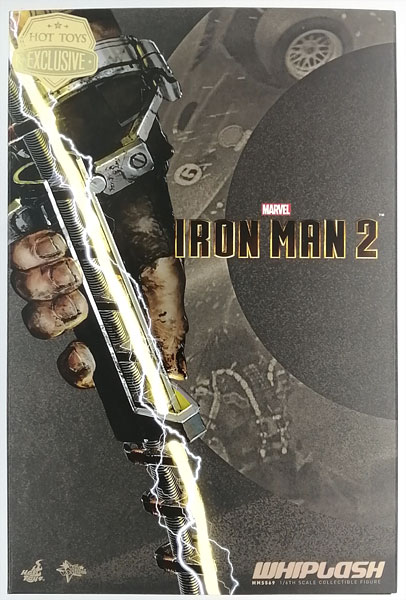 Movie Masterpiece Iron Man 2 1/6 Scale Figure Whiplash (2.0 Version) (Toy Sapiens Exclusive) →
Fundamental Differences from Korea's Secondhand Market
When you search for figures on Korean Junggonara or Bungaejangter, most listings only have vague expressions like "good condition" or "hardly any defects." Photos are also usually just one shot of the figure from the front and one of the box. Because there are no grading standards, prices are also all over the place. The same model is listed at 50,000 won in one place and 120,000 won in another, and you can't tell if the difference is condition or greed.
Japanese secondhand shops are the exact opposite. Photos are a minimum of 10, shooting all six sides of the box, showing the foam inside the blister, and including shots of accessories spread out one by one. The condition description field contains microscope-level records like "1mm paint bleed at left twintail tip." Buyers can appraise comfortably from home.
Of course, there are meticulous sellers in Korea too. But the problem is that this hasn't taken root as a culture. In Japan, within a secondhand shop system accumulated over 30 years, a minimum standard of "you need to do at least this much to sell" has formed. Korea is still centered on individual-to-individual transactions, so there are no standards. The market needs time to mature.
FAQ
How much do Japanese secondhand figure grades A and S actually differ?
S-grade is completely unopened new product with even the blister tape intact, while A-grade is opened and only displayed with no damage to the main body and accessories but with box opening marks present. Prices are usually 10-20% higher for S-grade than A-grade, but the more out-of-print the item, the more that gap widens, with S-grade sometimes fetching 1.5 times A-grade. If you're a collector who dislikes display history itself, aim for S-grade; if the purpose is actual use, A-grade offers better value.
Do boxless secondhand figures get traded in Japan too?
They do get traded, but prices drop significantly. With only the main body and no box or blister, they're usually priced at 20-30% of retail, and if accessories are also missing, it can drop below 10%. Because Japanese collectors view boxes not just as resale value but as completeness of the work, boxless items are treated as little more than "customization bases." Some secondhand shops even separate boxless products into a distinct display corner.
How do you calculate shipping fees when direct purchasing Japanese secondhand?
You must add Japan domestic shipping (usually 500-800 yen), forwarding service fees (1,000-3,000 yen by weight), international shipping to Korea (2,000-5,000 yen depending on weight and volume), and customs (about 10-13% if total purchase exceeds 150,000 won) to the product price to get the actual total. For one 1/8 scale figure, it's safe to budget 50-70% of the product price as additional costs. If you organize by item in an Excel sheet, it's easy to compare "whether a domestic new product is better at this price."
Secondhand figure grades differ by vendor, so how do you trust them?
The larger the secondhand shop, the more they publish their own grading standards on their website and specify return policies. Before purchasing, be sure to read that vendor's grading chart and check at least 10 product description photos. Reviews and reputation in figure communities like "this vendor's A-grade standards are strict/lenient" are also worth referencing. For first transactions, it's safer to make a test purchase with a low-cost item to get a feel for that vendor's grading sense.
---
Japan's secondhand figure market goes beyond the mere level of "having many well-stored products." This ecosystem created by the interlocking of the grading system, box culture, and appraisal transparency broadens choices for collectors, gives second life to out-of-print items, and coexists healthily with the new product market. That 2013 out-of-print scale you've pulled up in your search window right now could also come before you as Grade A, having slept for 10 years in someone's glass cabinet avoiding direct sunlight. May good connections reach your glass cabinet today as well.